
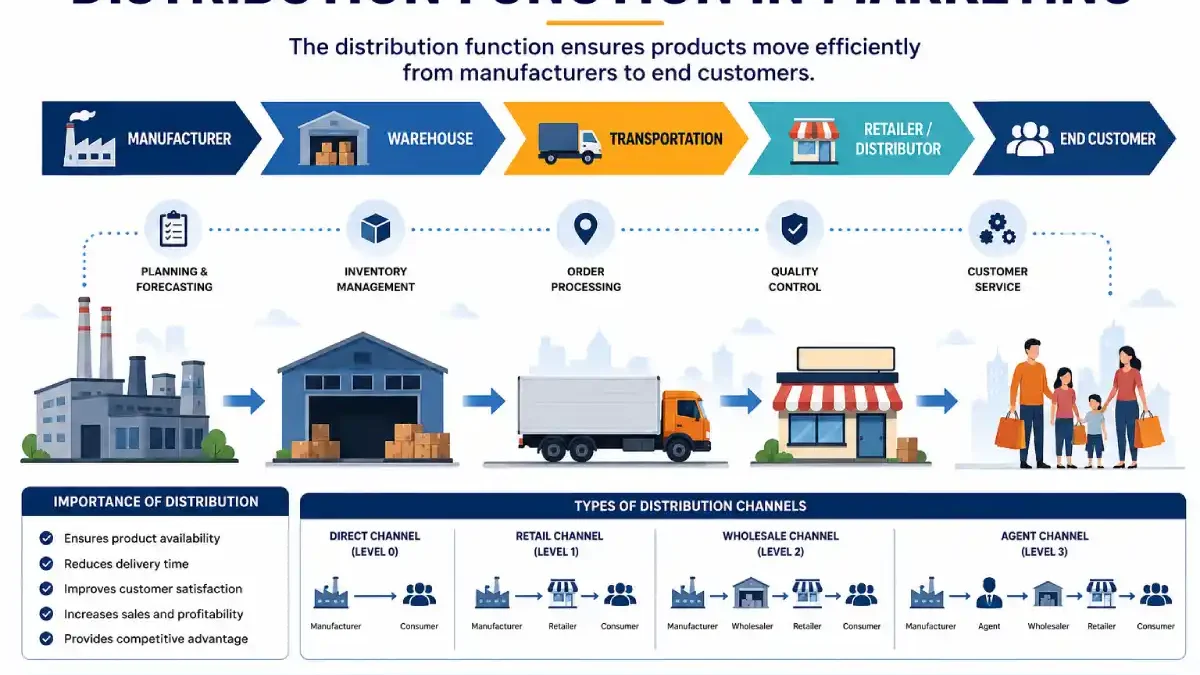

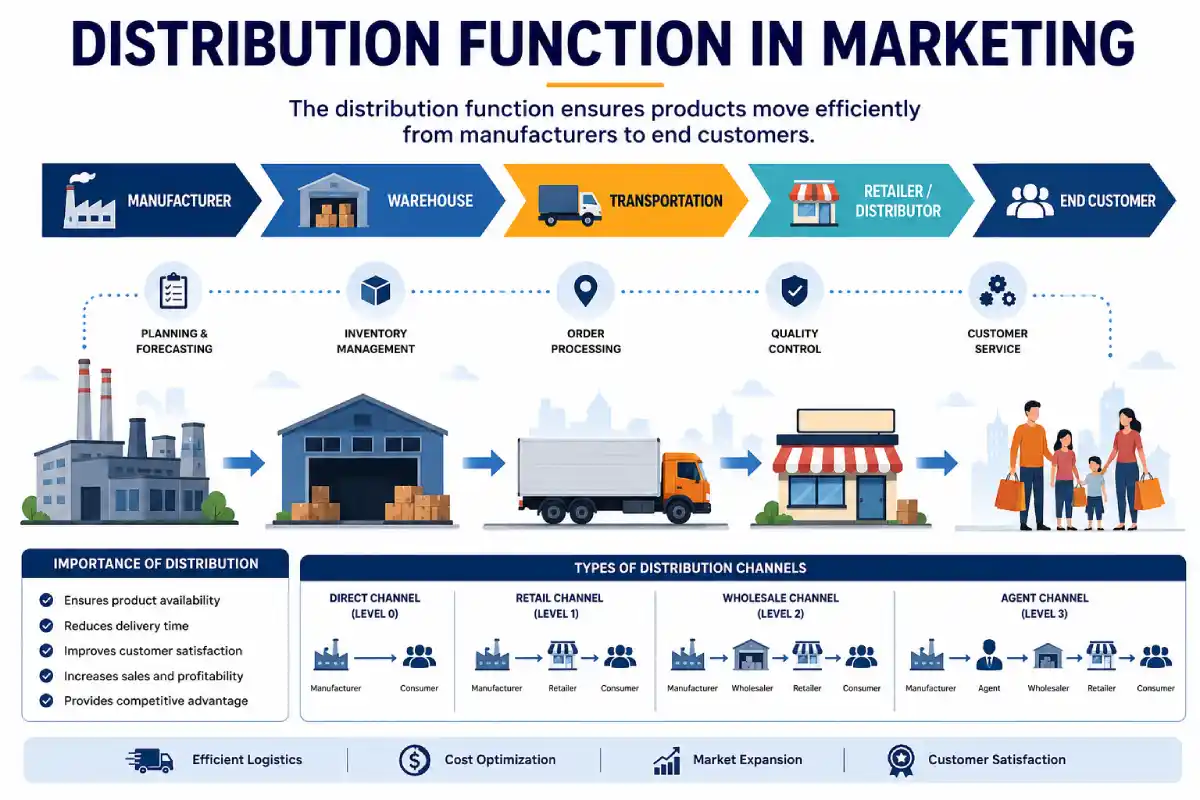


The marketing activity distribution function is the marketing activity by which a company places its goods and services from producers to final consumers. Whether a new product is novel or not, if it does not arrive in time to the right customer, it cannot generate any profit. The company should establish appropriate distribution channel, logistical process and channel management system to make goods available at the right place and time in today’s highly competitive market. Knowledge of distribution function is critical for marketers, entrepreneurs, as well as business students.
Table of Contents
This Article Is Part of the Marketing Resource Hub
Explore more guides, tutorials, strategies, and marketing resources inside our
Marketing Resource Hub .
This article provides information about what the distribution function in marketing entails, why distribution functions in marketing are crucial to the overall marketing mix, how distribution channels function, and the leading practices in distribution adopted by companies in 2026.
What Is the Distribution Function in Marketing?
Distribution function is a process in marketing in which products are made available to customers through different channels and middlemen. The function aims at distributing products effectively and economically to the customers at the desired place and time.
Simple Definition
Distribution is the marketing function which gets products from producers to consumers.
This function includes:
- Transportation
- Warehousing
- Inventory management
- Order fulfillment
- Retail distribution
- Channel management
If goods are not efficiently distributed, products can be a failure in the market.
Why Distribution Is Important in Marketing
Distribution covers the connection of production and consumption. Efficient distribution strategies are essential for ensuring product availability and customer satisfaction. According to Shopify Fulfillment Resources, businesses that optimize their fulfillment and distribution processes can improve delivery speed, reduce operational costs, and enhance customer experiences.
Key Profits
| Benefit | Impact |
| Product Availability | Ensures customers can buy products easily |
| Improved Customer Satisfaction | Faster delivery and better service |
| Increased Sales | Wider market reach |
| Competitive Advantage | Better distribution than competitors |
| Cost Competence | Reduced logistics expenses |
The customer’s expectations of swift delivery and product availability necessitate the importance of distribution.
Core Components of the Distribution Function
1. Transportation
Transportation moves items from a production facility to an warehouse, retailer or consumer.
Common methods include:
- Road transport
- Rail transport
- Air freight
- Ocean shipping
Companies select a transport method according to the cost, time and product.
2. Warehousing
Goods are stored in warehouses before they are delivered to consumers.
Benefits include:
- Inventory protection
- Demand fulfillment
- Faster order processing
In addition, most of today’s warehouses employ increased automation and AI-based inventory management.
3. Inventory Management
Stock control is managing your stock effectively.
Effective inventory management helps:
- Prevent stockouts
- Reduce overstocking
- Improve cash flow
4. Order Processing
Order processing involves:
- Receiving customer orders
- Verifying inventory
- Packaging products
- Shipping goods
Efficient order processing improves customer satisfaction.
5. Channel Management
Channel management emphasizes selection and coordination of intermediaries.
Examples include:
- Retailers
- Distributors
- Wholesalers
- E-commerce marketplaces
Types of Distribution Channels
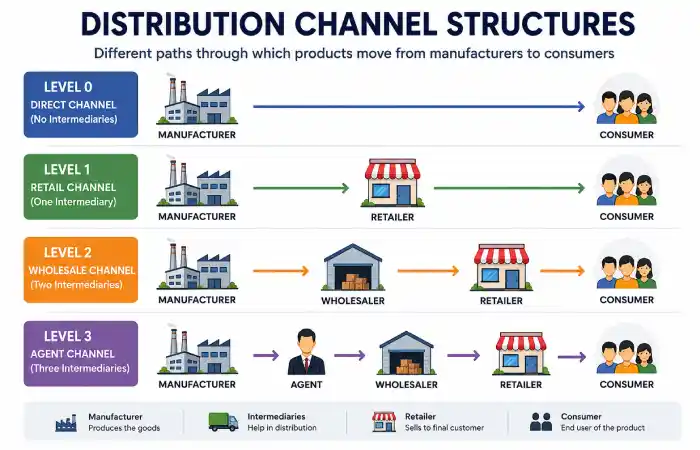
Businesses choose different channels depending on product type, target audience, and business goals.
Distribution Channel Comparison
| Channel Type | Description | Example |
| Direct Distribution | Manufacturer sells directly to customer | Brand website |
| Indirect Distribution | Uses intermediaries | Retail stores |
| Dual Distribution | Combines direct and indirect methods | Nike |
| Reverse Distribution | Product returns and recycling | Electronics recycling |
Distribution Channel Structure
Level 0 Channel (Direct)
Manufacturer → Consumer
Examples:
- SaaS companies
- DTC brands
- Online stores
Level 1 Channel
Manufacturer → Retailer → Consumer
Examples:
- Clothing brands
- Electronics companies
Level 2 Channel
Manufacturer → Wholesaler → Retailer → Consumer
Common in FMCG industries.
Level 3 Channel
Manufacturer → Agent → Wholesaler → Retailer → Consumer
Often used in international trade.
Distribution Function vs Logistics
Many people confuse distribution with logistics.
Comparison Table
| Feature | Distribution | Logistics |
| Focus | Delivering products to customers | Managing movement and storage |
| Scope | Marketing function | Operational function |
| Goal | Market availability | Supply chain efficiency |
| Includes | Channels and intermediaries | Transportation and warehousing |
Distribution is broader because it includes marketing decisions regarding channels and customer access.
Physical Distribution Management (PDM)
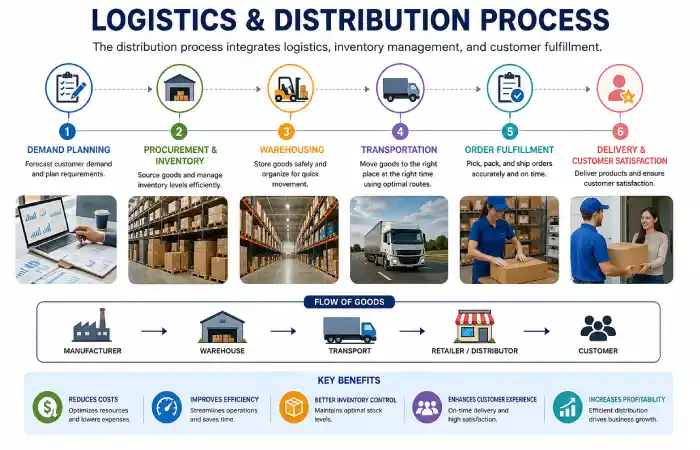
Physical Distribution Management refers to planning, implementing, and controlling product movement from production to consumption.
Main Objectives
- Reduce delivery costs
- Improve customer service
- Maintain inventory levels
- Optimize transportation
Companies that excel at PDM often achieve higher profitability and customer retention.
Distribution Function in Modern Supply Chain Marketing
The rise of e-commerce has transformed distribution strategies.
2026 Distribution Trends
| Trend | Business Impact |
| AI Demand Forecasting | Better inventory planning |
| Smart Warehousing | Faster fulfillment |
| Same-Day Delivery | Higher customer satisfaction |
| Omnichannel Distribution | Improved customer experience |
| Supply Chain Visibility | Better decision-making |
Businesses increasingly integrate marketing and supply chain operations to enhance customer experiences.
Real-World Examples of Distribution Function
Example 1: E-commerce Brand
An online retailer uses:
- Direct-to-consumer sales
- Regional warehouses
- Courier delivery networks
Result:
- Faster delivery
- Reduced costs
- Higher customer satisfaction
Example 2: FMCG Company
A consumer goods company distributes products through:
- Wholesalers
- Distributors
- Retail stores
Result:
- Nationwide market coverage
- Increased product availability
Example 3: Electronics Manufacturer
An electronics company combines:
- Online store
- Retail partners
- Marketplace sellers
Result:
- Multiple customer touchpoints
- Greater sales opportunities
Common Distribution Challenges
Challenges such as these do exist and hinder effective distribution.
Major Challenges
| Challenge | Solution |
| High Transportation Costs | Route optimization |
| Inventory Shortages | AI forecasting |
| Channel Conflicts | Strong partner agreements |
| Delivery Delays | Multi-warehouse strategy |
| Demand Fluctuations | Flexible inventory planning |
Best Practices for Effective Distribution Management
The key actions for increasing the effectiveness of marketing are:
- Select the right delivery channel.
- Use technology-driven inventory systems.
- Monitor channel partner performance.
- Improve supply chain visibility.
- Implement omnichannel strategies.
- Analyze customer purchasing behavior.
- Continuously optimize logistics operations.
These operations help businesses ensure efficient delivery of products and minimize operational costs.
FAQ’s
What is the distribution function in marketing?
Distribution function is a marketing function which consists in the transfer of goods from manufacturers to consumers using such channels as retailers, wholesalers, distributors, internet, etc.
Why is distribution important in marketing?
Distribution makes products accessible to customers, at the right place, at the right time, helping to increase sales and customer satisfaction.
What are distribution channels?
Distribution channels are pathways through which products travel from manufacturers to end consumers.
What is physical distribution management?
Physical distribution management focuses on transporting, storing, and delivering products efficiently to customers.
How does distribution affect customer satisfaction?
Efficient distribution reduces delivery times, prevents stock shortages, and ensures product availability, leading to better customer experiences.
Troubleshooting Common Distribution Problems
Problem: Products Frequently Go Out of Stock
Solution: Improve demand forecasting and inventory management systems.
Problem: Delivery Delays
Solution: Use multiple warehouse locations and optimize transportation routes.
Problem: High Logistics Costs
Solution: Consolidate shipments and use technology for route planning.
Problem: Poor Channel Performance
Solution: Evaluate channel partners regularly and establish clear performance metrics.
Conclusion
In marketing, the distribution function establishes a link between companies and customers. The function covers the methods of distributing goods through various distribution channels, the supply of goods and raw materials, the stock of goods, transport of goods, warehousing of goods, and management of distribution channels and activities, in order to efficiently transfer the product from production to the end customer. In 2026, e-commerce, AI-driven logistics, and the omnichannel retailing paradigm, all of these have been rapidly growing and developing business. Investment in and development of good distribution system helps business acquire a large degree of competitive advantage, which can help the companies expand their sales, improve customers’ satisfaction, and ultimately increase the success of the companies.