

Jun 18, 2026
Sep 16, 2026
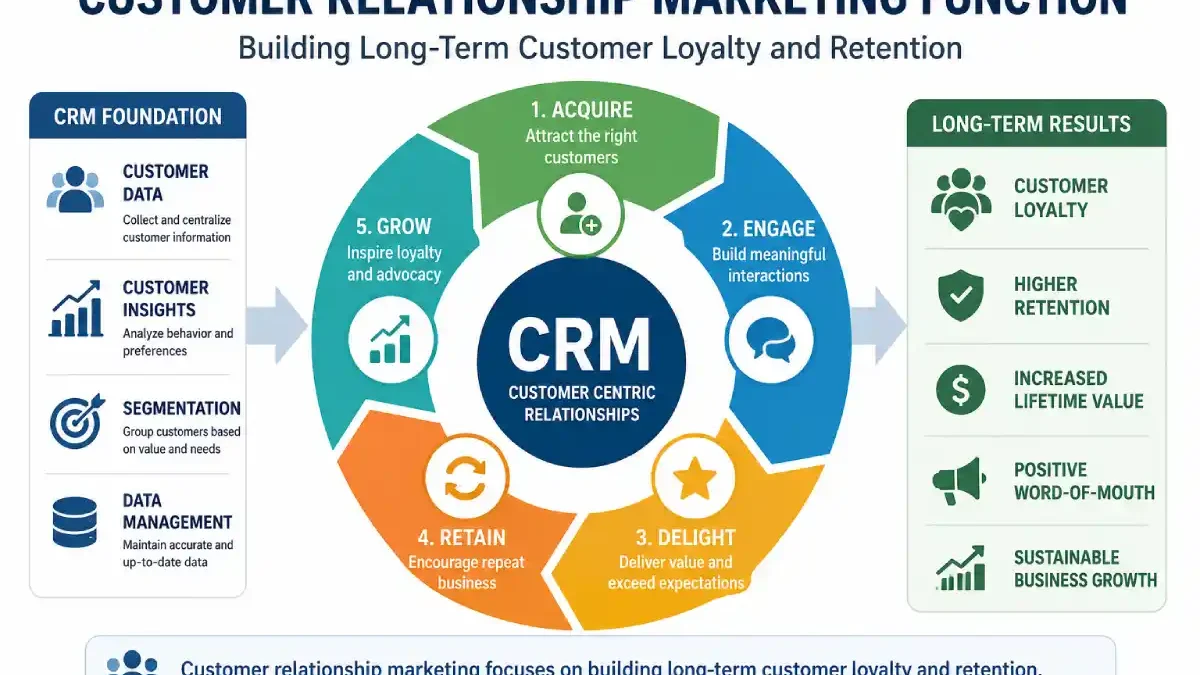
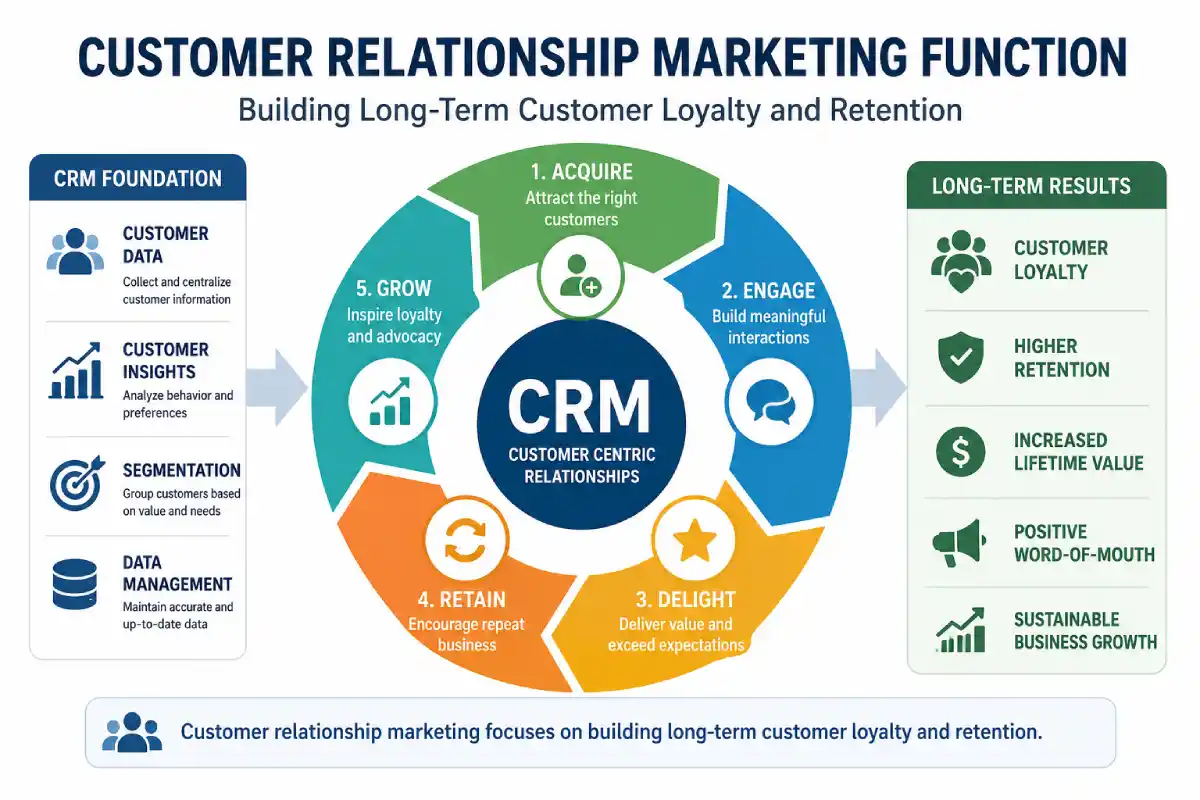
The customer relationship marketing function is most important function of modern marketing. Though gaining new customers is necessary, today, the companies give more priority to save their existing customer in order to find high profit maked, brand Value and power of loyalty is strengthened.
Table of Contents
This Article Is Part of the Marketing Resource Hub
Explore more guides, tutorials, strategies, and marketing resources inside our
Marketing Resource Hub .
Customer relationship marketing allows companies to have strong customer ties through personalized service and communication In the year of 2026, a business is more than likely to have success with 3–4 x the amount of work with great customer relations while less than 50 percent of its income may come from customers gained in the year alone. With this comprehensive guide we’ll teach what customer relationship marketing is, why it’s vital, and also what other companies successfully implemented CRM marketing approaches that resulted in more satisfied and longer-lived clientele.
What Is Customer Relationship Marketing?
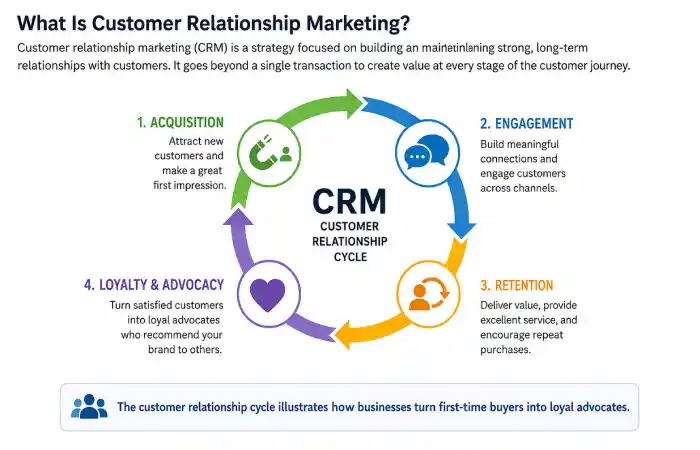
What is CRM Customer relationship marketing (CRM) involves a strategy to develop customer long term customer relationships and also, it’s far more the way to gain more and more customer sales, rather than a way to attract the client.
The goal is to:
- Improve customer satisfaction
- Increase customer loyalty
- Encourage repeat purchases
- Generate referrals
- Improve the customer lifetime value
As compared to conventional marketing, relationship marketing emphasizes continual touch throughout the entire course of a journey of a customer.
Key Objectives of the Customer Affiliation Marketing
| Objective | Purpose |
| Customer Retention | Keep customers engaged over time |
| Loyalty Development | Encourage repeat purchases |
| Customer Satisfaction | Deliver positive experiences |
| Brand Encouragement | Generate transfers and endorsements |
| Aera Value Growth | Upsurge long-term income per purchaser |
Why Customer Relationship Marketing Is Vital
Acquiring a new customer tends to be a far more costly endeavour than keeping current ones happy. Businesses with solid customer relations</b> enjoy :
- Higher retention rates
- Increased customer trust
- More repeat purchases
- Better online reviews
- Stronger brand reputation
- Reduced marketing costs
Companies that pay attention to building relationships with customers enjoy greater profitability because the most devoted ones do their shopping with increased frequency and don’t worry so much about prices.
Customer Relationship Marketing as a Essential Marketing Occupation
Among the major marketing functions, customer relationship marketing plays a critical role after the initial sale.
How It Fits Within Marketing Functions
| Marketing Function | Purpose |
| Marketing Research | Understand customer needs |
| Product Planning | Develop customer-focused products |
| Pricing | Create value-based pricing |
| Promotion | Communicate product benefits |
| Distribution | Deliver products efficiently |
| Customer Relationship Marketing | Retain and satisfy customers |
These functions keep customers interested beyond the purchase itself.
Key Components of Customer Relationship Marketing
1. Customer Communication
Sending out even updates keeps your customers in the ring and connected to your make.
Examples contain:
- Email newsletters
- Personalized offers
- Product updates
- Customer surveys
- Loyalty program notifications
2. After-Sales Service
Sales services constitute another essential part of relationship marketing.
Examples:
- Product support
- Warranty assistance
- Installation help
- Technical support
- Customer onboarding
Better customer experience increases customer satisfaction and minimizes customer churn.
3. Customer Reaction Management
Trades That Thrive Always Gather Feedback from Clienteles in Order to Enhance Offerings.
Common methods comprise:
- Online surveys
- Reviews and ratings
- Social media monitoring
- Customer interviews
- Support ticket analysis
4. Loyalty Programs
Reward programs encourage repeat purchases and increase retention.
Popular examples include:
- Points systems
- Membership benefits
- Cashback programs
- Exclusive discounts
- VIP rewards
CRM Marketing: The Technology Behind Relationship Marketing
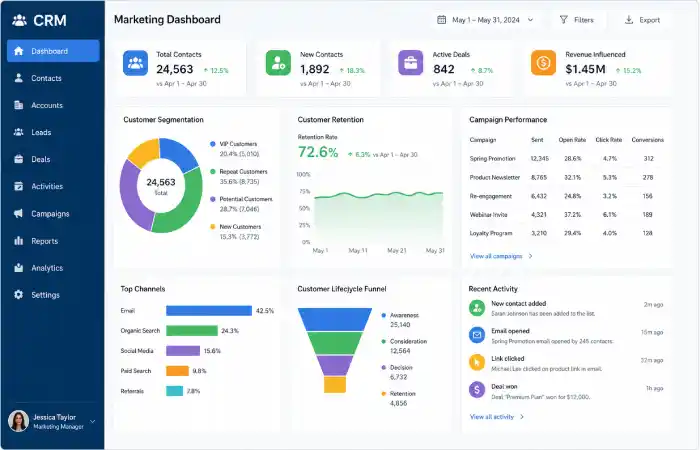
CRM marketing uses Customer Relationship Management software to track and manage customer interactions.
CRM platforms help businesses:
- Store customer data
- Monitor purchase history
- Automate communication
- Personalize campaigns
- Measure customer satisfaction
Modern businesses rely heavily on customer relationship management platforms to improve retention and personalize customer interactions. According to Salesforce CRM Resources, effective CRM strategies help organizations strengthen customer relationships, improve satisfaction, and increase long-term customer value.
Popular CRM Features in 2026
| Feature | Benefit |
| Contact Management | Organizes customer information |
| Marketing Automation | Saves time and improves consistency |
| Customer Segmentation | Enables targeted marketing |
| Analytics Dashboards | Tracks performance metrics |
| AI Recommendations | Improves personalization |
Client Retention Plans That Work
Businesses use some proven plans to retain the customers.
Modified Experiences
Clienteles expect relevant endorsements and personalized communiqué.
Examples:
- Product recommendations
- Personalized emails
- Customized offers
- Behavioral targeting
Fast Customer Support
Quick problem resolution improves satisfaction and loyalty.
Best practices:
- Live chat support
- AI-powered assistance
- Omnichannel communication
- Self-service knowledge bases
Trustworthiness Loots
Rewarding repeat purchases encourages ongoing engagement.
Community Building
Brands increasingly create communities where customers can:
- Share experiences
- Ask questions
- Learn from other users
- Engage directly with the brand
Customer Connection Marketing Performance Comparison
| Metric | Companies Without CRM Focus | Companies With CRM Focus |
| Customer Retention | Lower | Higher |
| Repeat Purchases | Moderate | High |
| Customer Satisfaction | Average | High |
| Referral Rate | Low | High |
| Customer Lifetime Value | Lower | Significantly Higher |
Real-World Example
Imagine an online electronics retailer.
Instead of ending communication after a purchase, the company:
- Sends order updates.
- Provides setup guides.
- Offers technical support.
- Requests feedback.
- Shares personalized recommendations.
- Rewards repeat purchases.
These activities reinforce customer relationships and upsurge long-term income.
Common Challenges in Client Relationship Promotion
Low Customer Engagement
Solution: Use personalized content and targeted campaigns.
Poor Data Management
Solution: Implement CRM software to centralize customer information.
Slow Support Responses
Solution: Automate common support requests and expand service channels.
Inconsistent Customer Experience
Solution: Create standardized customer service processes.
Best Practices for Customer Relationship Marketing
Follow these proven practices:
- Focus on customer needs first
- Deliver consistent experiences
- Use CRM tools effectively
- Personalize communication
- Measure customer satisfaction regularly
- Improve after-sales service
- Encourage customer feedback
- Reward loyalty
FAQ’s
What is the customer relationship marketing function?
It focuses on creating lasting ties with clients by engaging in direct and personal conversations with them, as long as customer assistance, initialing their experiences and rewarding them for their faithfulness.
Why is customer relationship marketing important?
Helps in client maintenance and builds satisfaction and purchase from recurring clients, increasing client lifetime value.
What is CRM marketing?
CRM Marketing This form of marketing involves leveraging customer relationship management software and customer data in order to maximize customer relations and to personalize marketing messages.
How does after-sales service support relationship marketing?
After-sales service helps customers after purchase, improving satisfaction and strengthening trust in the brand.
What are effective customer retention strategies?
Personalization, loyalty programs, fast customer support, customer feedback collection, and consistent communication are among the most effective strategies.
Conclusion
It’s important for companies that want to be able to succeed and survive long-term, customer relationship marketing is often very cost-effective, and because you’re not having to win new customers over, often adds more profit to the company, and has a bigger long-term impact. If used properly together, CRM marketing tools, customer retention policies, personalizing experiences, along with good after-sales support will lead to loyal, repeat customers.