

Last Updated: June 19, 2026
Table of Contents
Introduction
The increase of AI-powered unique tools has altered how performers, marketers, teachers, and content creators produce symbolic content. One developing trend is Paper Cut Simulation AI, which syndicates artificial intellect with the eternal visual appeal of handcrafted paper painting.
This Article Is Part of the SEO Hub
Explore more SEO guides, tutorials, strategies, and optimization resources inside our
SEO Resource Hub .
The rise of AI-powered creative tools has transformed how creators produce visual content, and many of these innovations are built upon the broader concept of Paper Animation AI, which combines automation with artistic storytelling.
Conventionally, paper-cut simulations required extensive corporeal design, cutting, layering, and frame-by-frame undertaking. Today, AI tools can systematize much of this process, manufacture it easier to produce visually attractive content for social television, publicity, educational videos, and storytelling preparations.
This guide explains how Paper Cut Animation AI works, its assistances, confines, system, and what users can realistically think when creation digital paper-style simulations.
What Is Paper Cut Animation AI?
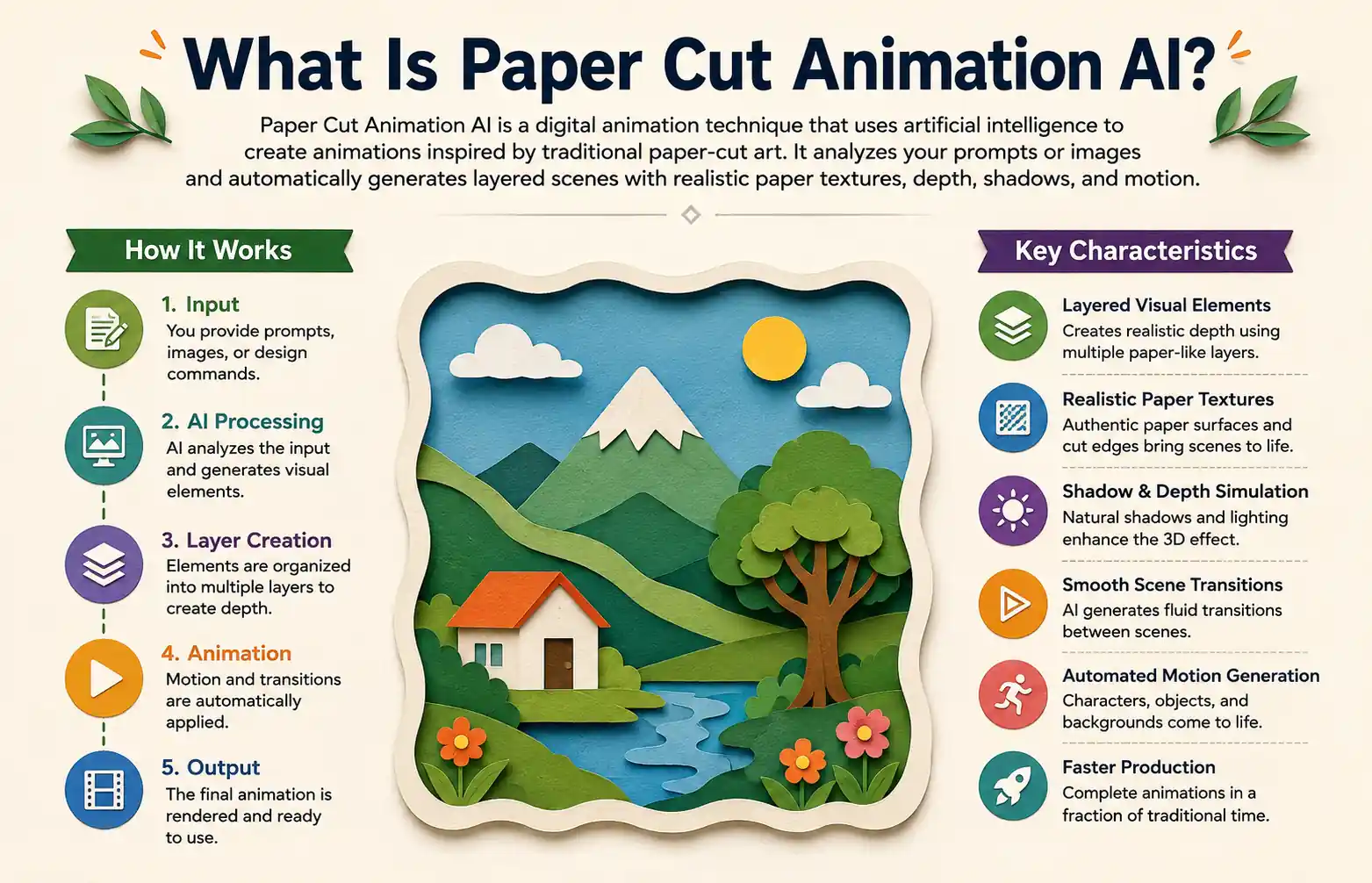
Paper Cut Animation AI is a digital simulation technique that uses artificial intelligence to produce simulations inspired by outdated paper-cut creation.
The technology examines prompts, images, or design commands and mechanically creates layered scenes that simulate paper textures, depth, shadows, and activities.
Instead of physically wounding paper and photographing separate frames, creators can creates comparable visual belongings digitally using AI-assisted systems.
Key Characteristics
- Layered visual elements
- Realistic paper textures
- Shadow and depth simulation
- Smooth scene transitions
- Automated motion generation
- Faster production compared to manual methods
Understanding the Paper Cut Animation Style
The Paper cut animation style is enthused by old-style paper craft art found in numerous cultures universal.
Artists create designs by cutting figures from paper and arranging multiple layers to form divisions. The resulting representation often appears three-dimensional despite existence made from flat resources. For a deeper understanding of traditional techniques that inspired modern AI workflows, creators can review Adobe’s paper cutout animation guide, which explains the fundamentals of layered paper-based animation.
Modern AI systems repeat these characteristics numerically by generating:
- Layer separation
- Depth perception
- Paper edge effects
- Textured surfaces
- Dynamic lighting
This allows makers to reservation the handmade aesthetic though promoting from digital efficiency.
What a Layered Paper Animation Works
What Is Layered Paper Animation?
Layered Paper Animation refers to the technique of stacking multiple visual layers to create depth and movement.
Each layer typically contains:
| Layer Type | Purpose |
| Background Layer | Environment and scenery |
| Midground Layer | Supporting visual elements |
| Foreground Layer | Main subjects |
| Shadow Layer | Adds realism and depth |
| Motion Layer | Creates animation effects |
When these coatings move independently, the animation generates a convincing three-dimensional result.
Why Layering Matters
Proper layering helps:
- Improve visual storytelling
- Create cinematic depth
- Enhance audience engagement
- Simulate handcrafted paper scenes
AI Paper Art Animation: How AI Creates the Effect
The AI Generation Process
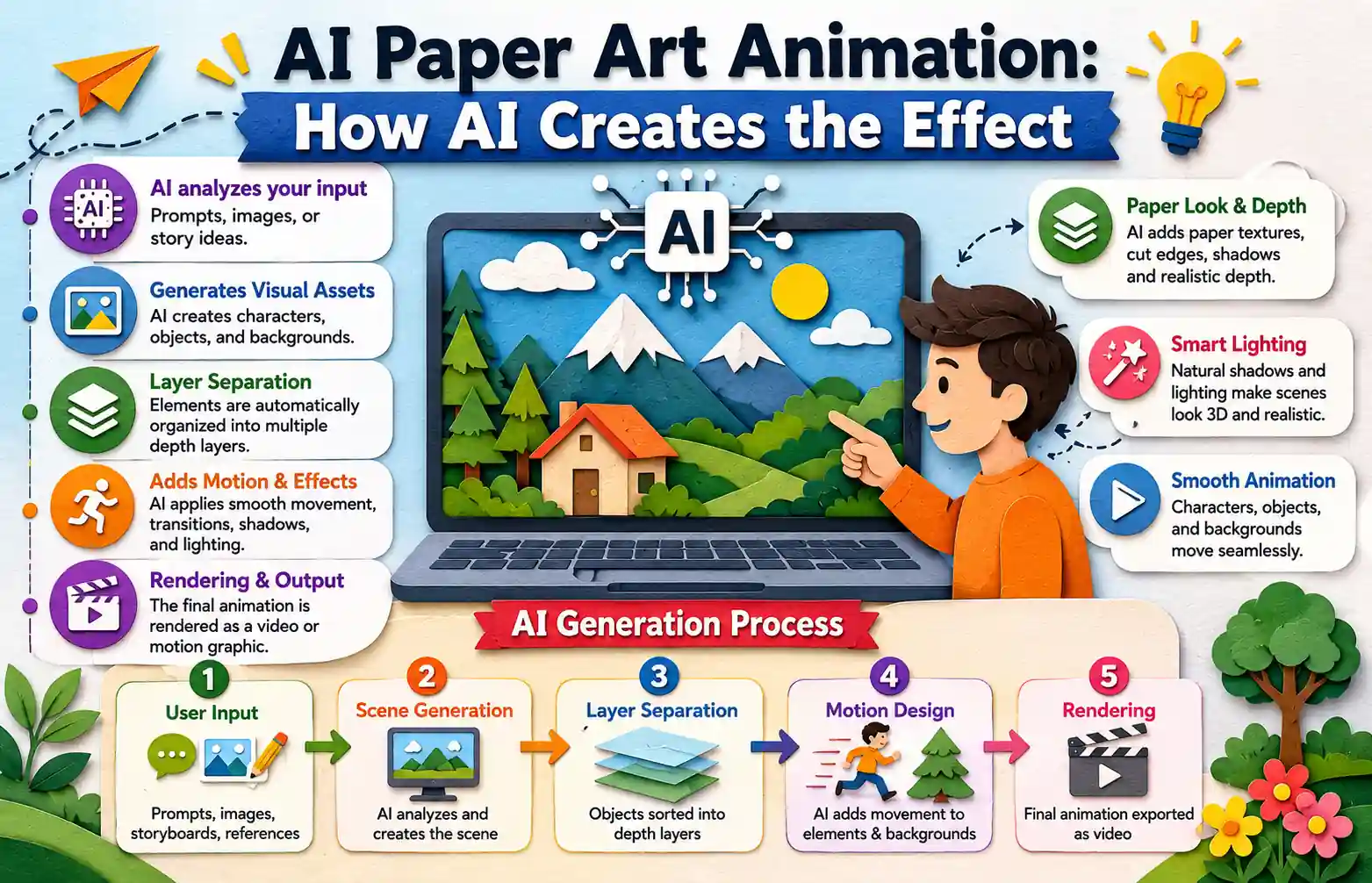
AI Paper Art Animation tools typically follow a structured generation process.
Step 1: User Input
The creator provides:
- Text prompts
- Images
- Storyboards
- Style references
Step 2: Scene Generation
AI analyses the input and generates visual assets.
Step 3: Layer Separation
Objects are automatically organised into multiple depth layers.
Step 4: Motion Design
Movement is added to characters, objects, and backgrounds.
Step 5: Rendering
The final animation is exported as a video or motion graphic.
Many modern Paper Animation AI tools offer automated scene generation, layer separation, and motion design features that significantly reduce production time.
Workflow for Creating Paper Cut Animation AI Projects
Standard Workflow
| Stage | Activity |
| Concept Development | Define story and visual style |
| Prompt Creation | Provide AI instructions |
| Asset Generation | Generate paper-style elements |
| Layer Arrangement | Organise scene depth |
| Animation Setup | Add motion effects |
| Review & Editing | Refine visuals |
| Final Export | Render completed video |
This workflow helps maintain consistency and quality throughout production. Beginners looking to create paper animation with AI can follow a structured workflow that includes prompt creation, asset generation, and scene animation.
Digital Paper Animation Applications
Marketing Campaigns
Products increasingly use Numerical Paper Animation to generate unforgettable advertisements.
Examples include:
- Product launches
- Brand storytelling
- Promotional videos
- Social media campaigns
- Educational Content
Educational inventers use paper-style graphics because they simplify complex subjects and maintain viewer consideration.
Children’s Content
Paper-inspired animations often appeal to younger audiences due to their colourful and handcrafted appearance.
Corporate Presentations
Businesses use paper-style motion graphics for:
- Explainer videos
- Training materials
- Internal communications
Paper Stop Motion AI vs Traditional Stop Motion
Many users compare Paper Stop Motion AI with conventional stop-motion production.
Comparison Table
| Feature | Paper Stop Motion AI | Traditional Stop Motion |
| Production Speed | Fast | Slow |
| Equipment Required | Minimal | Extensive |
| Manual Labour | Low | High |
| Creative Flexibility | High | High |
| Cost | Generally Lower | Often Higher |
| Learning Curve | Moderate | Steeper |
| Physical Materials | Not Required | Required |
AI solutions significantly reduce production time while preserving much of the traditional visual appeal.
Benefits of Using Paper Cut Animation AI
Faster Content Creation
AI automates repetitive tasks such as asset generation and scene assembly.
Lower Production Costs
Digital workflows reduce expenses associated with:
- Materials
- Studio equipment
- Photography setups
- Improved Accessibility
Creators without professional animation experience can still produce visually appealing content.
Creative Experimentations
AI allows rapid testing of multiple visual concepts before finalising a project.
Limitations and Realistic Opportunities
While Paper Cut Animation AI offers imposing capabilities, it is significant to preserve realistic prospects.
Common Limitations
Generated layers may require manual adjustments.
Complex storytelling still benefits from human creative direction.
AI-generated textures may occasionally appear repetitive.
Fine details can sometimes require additional editing.
Performance Prospects
For short-form advertising videos and social content, AI tools can significantly hasten production.
For feature-length storytelling or extremely detailed artistic projects, creators must expect additional physical modification.
The best results characteristically originate from combining AI mechanization with human creative mistake.
Who Would Use Paper Cut Animation AI?
- Ideal Users
- Digital marketers
- Social media creators
- Educators
- Small businesses
- Content agencies
- Freelance designers
- Video production teams
- Users Who May Need Advanced Tools
- Professional animation studios
- Film production companies
- Large-scale VFX teams
- High-end cinematic creators
These users often require greater customisation than AI-only solutions can currently provide.
New creators and small businesses often start with free Paper Animation AI generators before investing in advanced animation platforms.
Best Practices for Better Results
Use Detailed Prompts
Specific instructions usually produce more consistent outputs.
Focus on Layer Depth
Clear separation between foreground and background improves realism.
Keep Scenes Simple
Overly complex scenes may reduce visual clarity.
Review Generated Assets
Manual quality checks help identify inconsistencies before publishing.
Test Different Styles
Experimenting with manifold paper textures often recovers the final outcome.
Frequently Asked Queries
What is Paper Cut Cartoon AI?
Paper Cut Animation AI is a knowledge that generates digital simulations that resemble handcrafted paper-cut creation using artificial intellect, layered visuals, and mechanical motion belongings.
Is Paper-Cut Animation AI appropriate for beginners?
Yes. Many AI animation tools are intended for users with incomplete animation knowledge and provide mechanical systems.
Can AI completely replace traditional paper animation?
Not entirely. AI can mechanize many production tasks, but artistic course and creative decision-making remain significant for high-quality consequences.
What industries use paper-style animations?
Marketing, education, advertising, social media content creation, corporate communications, and children’s entertainment commonly use paper-style animation techniques.
Does Paper Stop Motion AI require physical paper?
No. Most Paper Stop Motion AI systems simulate paper effects digitally without requiring physical materials.
Conclusion
Paper Cut Animation AI is serving makers produce visually attractive animations quicker than traditional paper-based methods. By combination artificial intelligence with the decisive charm of layered paper formation, creators can mature appealing content for advertising, education, storytelling, and digital television.
While AI tools offer substantial competence benefits, the solidest results still come from thoughtful preparation, excellent prompts, and human creative oversight. As technology lasts to improve, Paper Cut Animation AI is likely to develop an increasingly valuable choice for creators seeking a sole and accessible animation elegance.