
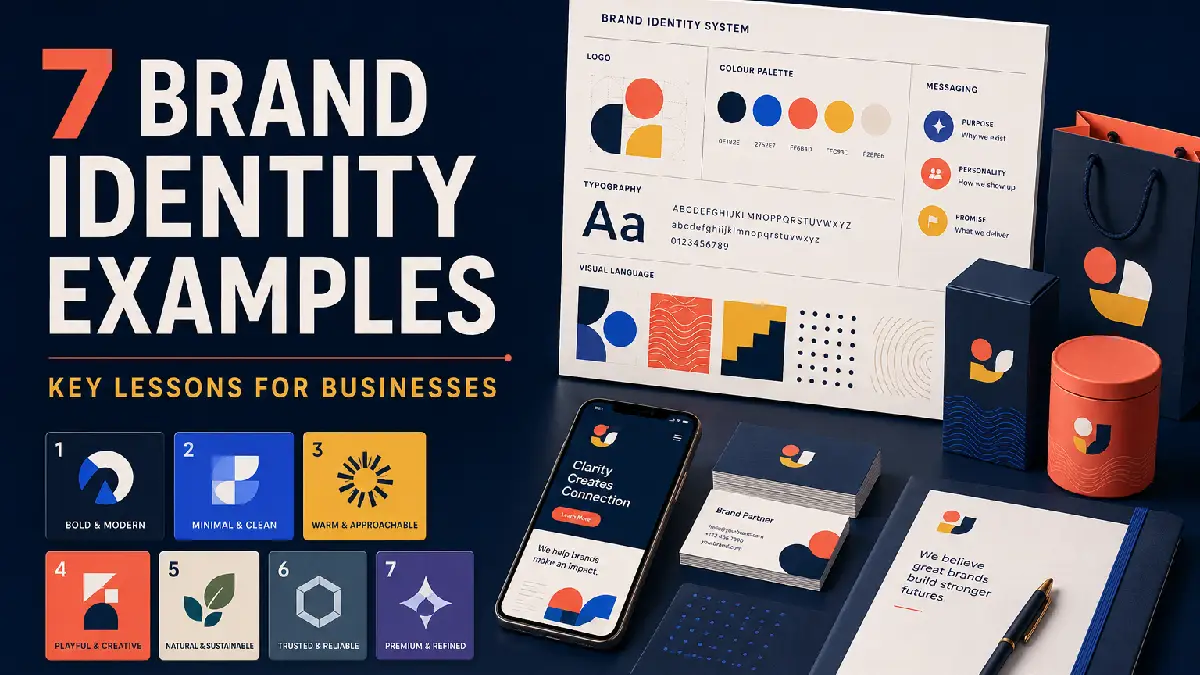



Never had a strong logo have a very lasting brand by themselves. Some of the best brand identity examples, be it a technology giant or a household name brand from India, illustrate how a design system combined with messaging, values, and customer journey come together to build a brand’s image in the public eye. Every strong brand identity also comes with lessons for smaller ventures, to implement with caution and without plagiarism.
Table of Contents
This Article Is Part of the Marketing Resource Hub
Explore more guides, tutorials, strategies, and marketing resources inside our
Marketing Resource Hub .
What Is Brand Identity?
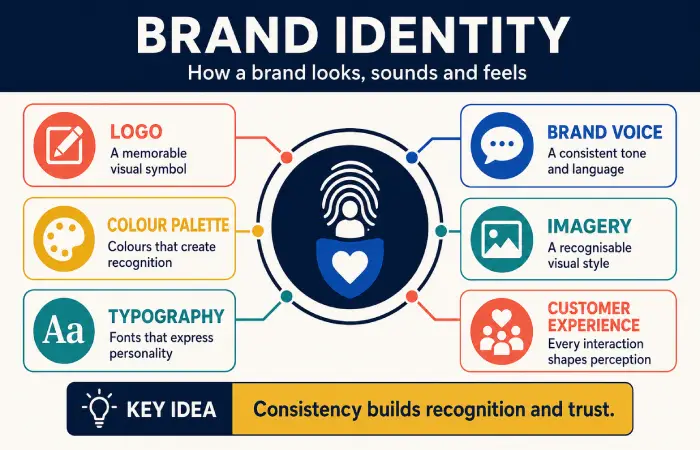
It is what a business consciously puts forward to itself. It’s everything you would associate with your company with name, logo, color scheme, typography, product design, voice, and style.
Brand identity differs from the brand image.
Your company ‘designs’ identity; customers’ ‘perceive’ brand image, although the business can and do have a direct impact on perception.
What the Best Brand Identity Examples Have in Common
The most iconic brand identities may be none of the most brightly colored and costly ones. The power they carry is due to the uniformity of their application, and due to their relevance to their consumers as well as their specificity to one another.
This kind of brand identity has a set mission and design which would fit its targeted consumer groups, in addition to it also is supple enough for application on sites online as well as social media platforms, packaging materials and advertisements and brick-and- mortar stores.
| Brand | Distinctive identity element | Brand personality | Practical lesson |
| Apple | Minimalist product and visual design | Premium and innovative | Simplicity can improve recognition |
| Nike | Swoosh and motivational language | Confident and energetic | Build identity around an emotion |
| Amul | Topical illustrations and witty copy | Familiar and socially aware | Consistent storytelling builds recall |
| Zomato | Bold red colour and conversational copy | Playful and accessible | Adapt language to the audience |
| Tata | Unified name and trust-led reputation | Dependable and responsible | Values can strengthen an identity |
| Paper Boat | Nostalgic packaging and stories | Warm and emvotional | Cultural insight creates connection |
| Fevicol | Humorous demonstrations of strength | Practical and memorable | Show the product benefit creatively |
Famous Brand Identities and Their Key Lessons
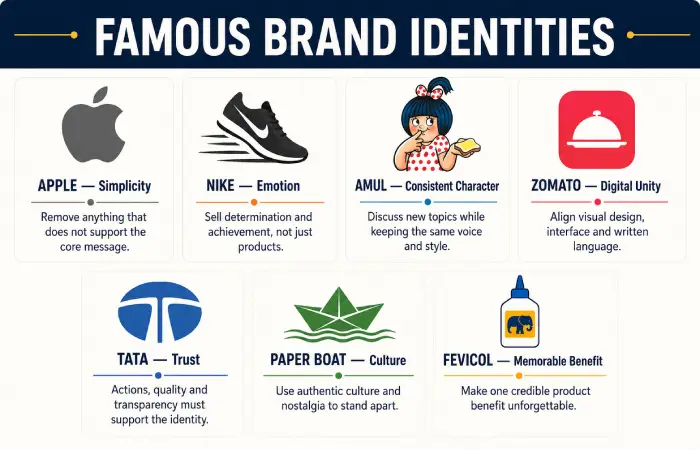
Apple: Consistency Through Simplicity
Apple is one of the most usually recognised famous brand identities. Its identity uses limited colours, clean font, minimalist product photography and organized retail spaces.
The lesson is not that every company should use a minimal design. Instead, businesses should remove basics that do not support their essential message. Simplicity works when it considers the product and is applied constantly.
Nike: Selling a Feeling, Not Just a Product
Nike’s swoosh is unique, but its identity continues much further. Its photography, athlete partnerships and motivational language consistently communicate determination and personal achievement.
This demonstrates the value of choosing a central emotion. A fitness company, for example, could build its identity around confidence, community or sustainable progress rather than merely showing exercise equipment.
Amul: A Successful Indian Branding Example
Amul has maintained a recognizable identity through its mascot, topical advertising and regular writing style. Its advertisements reply to current events while remaining obviously Amul.
Among Indian successful branding examples, Amul shows that consistency does not require repetition. A brand can discuss new subjects while retaining the same character and visual framework.
Zomato: A Digital-First Visual Identity Example
Zomato uses a bold red palette, simple interfaces and short, conversational messages. Its app, notifications and social media communication share a similar personality.
This is one of the most useful visual identity examples for digital businesses. Visual design and written language should feel connected. A polished logo cannot compensate for confusing interfaces or an inconsistent communication style.
Tata: Building Identity Through Trust
The Tata identity is supported by more than a symbol. Its reputation is linked with reliability, scale and social responsibility across several industries.
The key lesson is that actions influence identity. Businesses cannot build a trustworthy brand through design claims alone. Customer support, product quality and transparent policies must reinforce the intended message.
Paper Boat: Using Culture and Nostalgia
Paper Boat’s packaging and storytelling draw on common Indian drinks, childhood memories and regional traditions. This gives the company a warmer identity than a conventional beverage brand.
Its approach shows how cultural insight can create differentiation. However, homesickness should feel genuine and significant to the product; pushed emotional storytelling may reduce reliability.
Fevicol: Making a Product Benefit Memorable
Fevicol’s advertising repeatedly communicates adhesive strength through exaggerated but easily understood situations. Although individual campaigns change, the central idea remains stable.
This consistency has helped transform a functional product benefit into a recognisable brand characteristic. Smaller businesses can apply the same principle by identifying one credible benefit they want customers to remember.
Branding Case Studies: A Quick Comparison
These short branding case studies reveal that no single identity style suits every organisation.
| Approach | Suitable for | Main advantage | Possible limitation |
| Minimalist identity | Technology and premium products | Clear and adaptable | Can appear generic |
| Emotion-led identity | Fitness and lifestyle brands | Builds a deeper connection | Claims must match the experience |
| Humour-led identity | Everyday consumer products | Improves recall | Humour may not translate everywhere |
| Heritage-led identity | Food and cultural products | Creates authenticity | May limit future positioning |
| Trust-led identity | Finance and professional services | Supports long-term confidence | Takes time to establish |
How to Develop a Brand Identity
1. Define the Audience and Position
Identify who the brand serve up, what problem it resolves and why customers might choose it. Avoid starting with logo concepts before answering these questions.
2. Review Competitors
Study competitor colours, language, visual patterns and market claims. The purpose is to identify common expectations and opportunities for meaningful differentiation.
3. Establish Brand Personality
Choose three or four specific characteristics, such as practical, optimistic and knowledgeable. These traits should guide both design and communication.
4. Create the Identity System
Develop the logo, colours, typography, imagery and tone-of-voice guidelines, then document them in a clear brand style guide. Businesses should also consider protecting distinctive assets such as their name, logo, tagline and packaging. The UK Government’s business and brand protection guidance explains how these elements may qualify as intellectual property.
5. Apply and Test the Identity
Use the identity across the website, email, social media, packaging and customer support. Gather feedback to see whether audiences identify the intended qualities.
6. Review It Periodically
An identity should evolve when customer needs or business positioning changes. Updates should retain recognizable elements unless the existing identity creates genuine confusion.
Realistic Expectations When Building a Brand Identity
A new visual system will not immediately create trust, loyalty or higher sales. Identification develops through repeated exposure and reliable customer experiences.
Small businesses also do not need the budgets used by companies worldwide. A clear logo, limited color palette, readable typography and consistent writing style can establish a solid foundation. The main limitation is that identity cannot repair an unreliable product or poor service.
Advantages and Limitations of a Strong Identity
A consistent brand identity can improve identification, make marketing materials simpler to produce and help employees correspond constantly. It may also allow customers to understand the company’s position more instantly.
However, extreme consistency can make a brand inflexible. Trends can date visual choices, and a dramatic redesign may confuse existing customers. Businesses should therefore balance recognizability with continuing improvement.
Frequently asked questions
What are some effective brand identity examples from India?
A few effective examples from India include Amul, Tata, Zomato, Paper Boat and Fevicol. These brands have developed awareness using their own mix of visual, communicative and experiential attributes.
What does it take for a brand identity to be successful?
A successful brand identity must be relevant to the target audience, distinct enough to be noticed and consistently implemented across key points of contact. Additionally, a company’s actual behaviours and products must support its proclaimed identity.
Are the logo and brand identity interchangeable?
No. A logo is just one element of a company’s identity.
Comprehensive brand identity encompasses colors, fonts, photography style, tone of voice, messaging, packaging, website design, and customer interaction.
When should a business revisit its brand identity?
It’s not a hard and fast rule, but you might want to revisit your identity when your target audience, service offering, competitive landscape, or overall business strategy changes. Incremental updates may be less risky than a full redesign.
Final Thoughts
All the examples above conclude that the ‘memorability’ factor of a brand does not rest solely upon one element of a brand’s design, but upon a holistic system that is maintained through time. We see the effect of minimalism with Apple, the emotional connection built with the customer, a strong feeling of ‘trust’ built by companies such as Amul and Tata, and ‘familiarity’ associated with brands like Paper Boat. Companies can incorporate this from these learning to come up with their own individual yet powerful brands.