

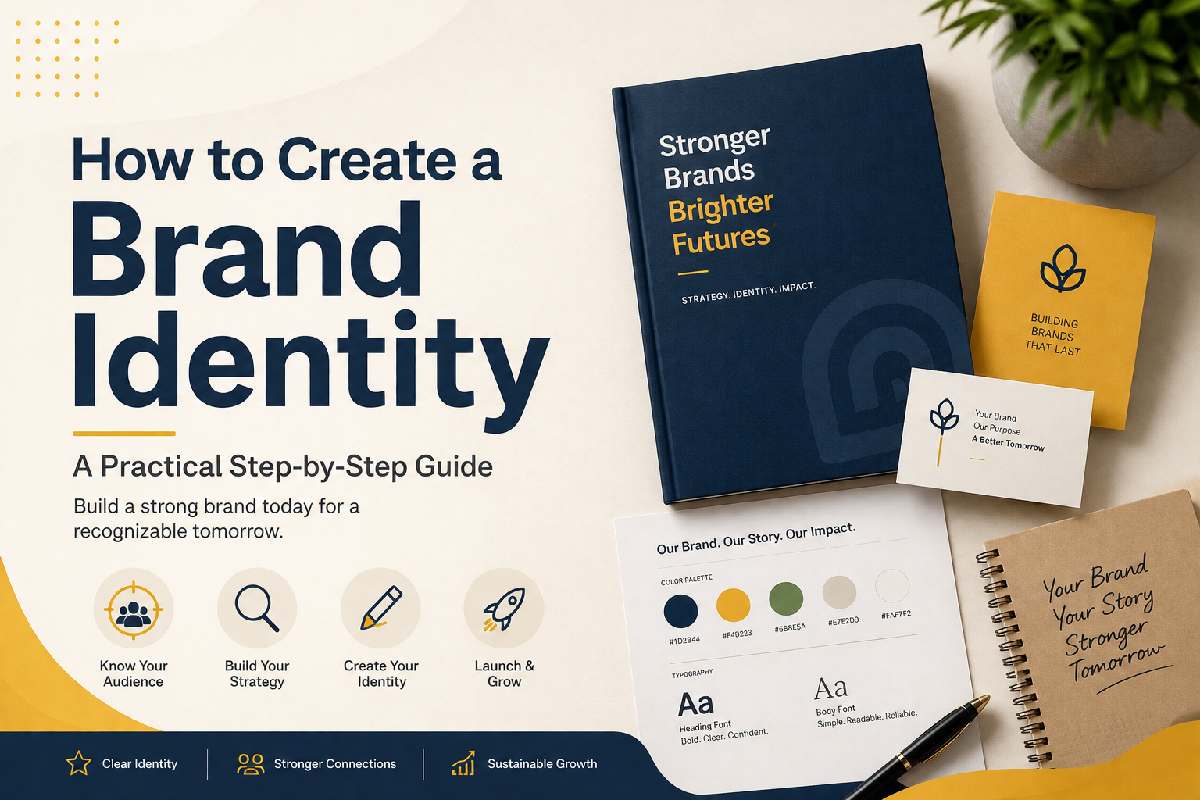


To understand how you need to design the identity of your business is beyond choosing only a set of colors or a font style for the brand as well as just about picking a logo design; it’s about determining who your customers should take note. For an Indian small enterprise or startups creating a good foundation at the start can save you from not talking anything useful and uncalled spending on redesigning your model identification over the last section of the enterprise cycle.
Table of Contents
What Is a Brand Identity?
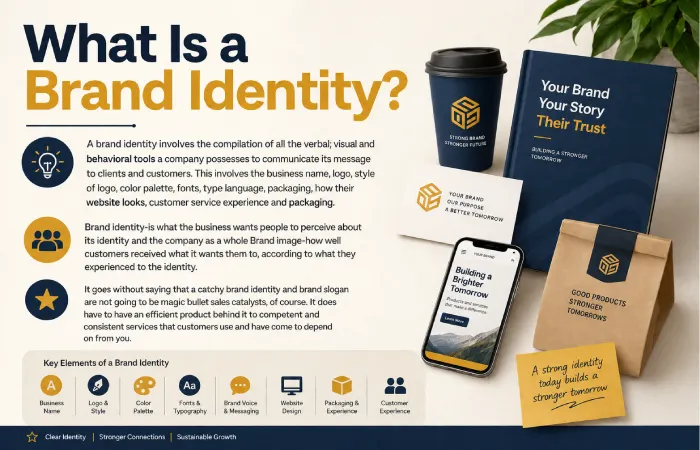
A brand identity involves the compilation of all the verbal; visual and behavioral tools a company possesses to communicate its message to clients and customers. This involves the business name, logo, style of logo, color palette, fonts, type language, packaging, how their website looks, customer service experience and packaging.
Brand identity-is what the business wants people to perceive about its identity and the company as a whole Brand image-how well customers received what it wants them to, according to what they experienced to the identity.
It goes without saying that a catchy brand identity and brand slogan are not going to be magic bullet sales catalysts, of course. It does have to have an efficient product behind it to competent and consistent services that customers use and have come to depend on from you.
Why Building a Clear Identity Matters
Being consistent in one aspect of a company across a website, social media channels, advertisement or on printed material could facilitate recognition in future communication across many different platforms and could possibly influence decisions made by internal designers and other creative.
For example, a financial consultancy may use precise language, restrained colours and structured layouts to communicate reliability. A children’s clothing brand may use brighter colours and a warmer, more playful voice.
The identity should fit the audience and market rather than simply following current design trends.
Brand Identity vs Basic Visual Branding
| Area | Basic visual branding | Complete brand identity |
| Primary focus | Appearance | Meaning, communication and appearance |
| Elements | Logo, colours and fonts | Strategy, positioning, voice, visuals and experience |
| Audience research | Sometimes limited | Essential |
| Usage guidance | Basic logo files | Detailed brand guidelines |
| Long-term value | May need frequent changes | Designed to support consistent growth |
| Main limitation | Can look attractive without meaning | Requires more research and testing |
How to Create a Brand Identity in Eight Steps
The following branding process guide can be used by a new venture or an established company preparing for a rebrand.
-
Research Your Target Audience
Begin with the people the business plans to serve. Identify their problems, importance, purchasing habits, selected channels and expectations.
Avoid communicating with the audience only by age or location. Two customers of the same age living in Bengaluru may have different budgets, motivations and purchasing behaviors.
Customer interviews, search data, proving questions, reviews and sales discussions can give more useful insights than expectations.
-
Review ofCompetitors and the Market
Study direct and indirect competitors to understand common category patterns. Record their messaging, visual style, pricing position, strengths and customer complaints.
This research is not an invitation to imitate them. Its purpose is to find overused ideas, unmet needs and areas where your business can communicate more clearly.
-
Define Your Purpose and Values
Write down why the business exists beyond making revenue. Then select a small number of values that can guide actual decisions.
Terms such as “quality” and “innovation” are too broad unless they are supported by specific behavior. A practical value might be transparent pricing, locally sourced materials or responses to customer enquiries within one working day.
-
Develop a Brand Positioning Strategy
Brand positioning explains the specific place a business wants to occupy in its audience’s mind. It normally identifies the target customer, relevant category, main benefit and reason to believe the claim.
A simple positioning template is:
For [target audience], our business provides [product or service] that delivers [meaningful benefit] because [supporting evidence].
Keep this statement internally focused. It should guide communication, not necessarily appear word for word in advertising.
-
EstablishYour Brand Personality and Voice
Decide how the brand should sound and behave. It might be knowledgeable but approachable, energetic but practical, or premium but understated.
Create examples of acceptable and unsuitable language. If the voice is “clear and supportive”, explain what that means in a product description, complaint response and social media post.
-
Design the Visual Identity
The visual system usually includes:
- A primary logo and simplified variations
- Primary and secondary colour palettes
- Heading and body typefaces
- Photography or illustration direction
- Icons, shapes and layout rules
Every decision should support the strategy. Colors also appear differently on screens and printed materials, so test the system in realistic formats before approving it.
-
Create Brand Guidelines
Brand guidelines explain how to use the identity consistently. They should cover logo spacing, minimum sizes, colour codes, typography, imagery, writing style and common mistakes.
A small business does not require a hundred-page manual. A clear document of 10–15 pages may be enough initially, provided it addresses the channels the business uses.
-
Test, Launch and Refine
Test the identity with customers, employees and practical applications. Ask what the brand appears to offer and how it makes them feel. Avoid asking only whether they “like” the design, as personal taste may not indicate commercial suitability.
After launch, review customer feedback, website behavior, branded search activity and message consistency. Refine weak applications without changing the central identity every few months.
Brand Identity Workflow
A manageable workflow for building an identity is:
Audience research → competitor review → positioning → personality and voice → visual concepts → application testing → guidelines → launch and review
Complete the strategic stages before commissioning final designs. Otherwise, the logo may be visually appealing but disconnected from the audience or business goals.
Common Mistakes When You Build a Brand Identity
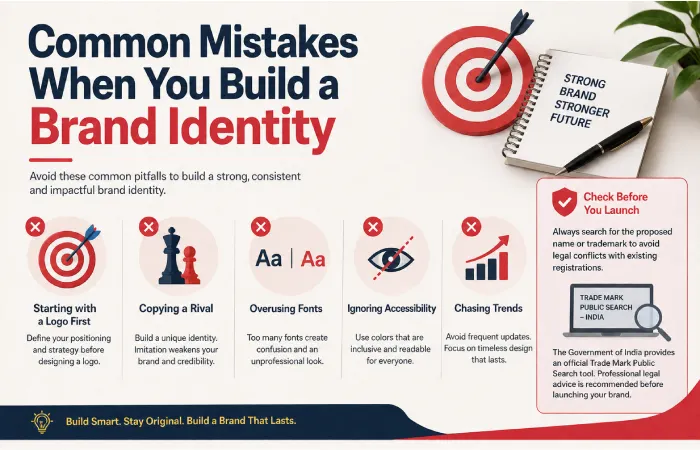
One frequent mistake is beginning with a logo before defining the positioning. Others include copying a rival’s design, the overuse of fonts; color combinations that are unavailable to be perceived by those with impaired sight; updating visual systems on every passing trend.
Business should consider looking for the proposed name or trademark for potential conflicts with pre-existing trademark. The Government of India provides an official Trade Mark Public Search, although professional legal advice may still be appropriate before a major launch.
Realistic Time and Performance Expectations
A basic identity for a small operation might take three to six weeks. A research-led identity involving several markets, customer groups and decision-makers can take two to four months or longer.
Results should also be judged realistically. A new identity may improve clarity, recognition and consistency, but it cannot compensate for poor service or immediately guarantee higher sales.
A less obvious signal is simply that you run into fewer contradictions in the first place as you gain greater insight into your target market and streamline the content-generation process. Effects with a longer time lag-enhanced recognition and greater customer favorability will typically only emerge after the repeated positive experience and association develop over time.
Benefits of and Limitations of Creating Your Brand Strategy
You establish more defined criteria to guide every decision your business makes, which becomes quite handy when it comes to selecting work you outsource. It also helps ensure a greater degree of consistency when it comes to how your customers interact with any part of your brand.
On the flip side, however, it takes time and research to create brand guidelines. They also become problematic if they are seen as unchallengeable rules since guidelines need to be recognized across all the various media.
Frequently asked Questions
What are the key elements in creating a brand identity?
The major factors for building your brand identity: audience research, competitor research, determine business purpose, define positioning, set personality, establish visual identity, create and test and make guidelines for Use.
What is the typical cost for a brand identity design in India?
There are several reasons why prices vary and the range can span anything from tens of thousands with a freelancer, right up to several lakhs for a deeper agency driven project. Focus on comparing scope and processes rather than just cost.
Can I build a brand identity without an agency?
Yes. A founder can do much of the initial work on brand strategy and can execute using simpler available design tools. An agency becomes valuable if a truly unique set of assets or sophisticated guidelines are needed or there are complexities like packaging or legal considerations/trademark protection.
Is a logo the same as a brand identity?
No, a logo is one of several brand identity assets, which also includes things like tone of voice, colors and typography, positioning of the brand and how all of these interact.
Conclusion
To develop a brand identity correctly starts with a strategy, not design. Research the right target audience, position the brand in a convincing way and then create and build upon the personality and then the visual system. Test the results in practice, write up strict guidelines and let brand recognition grow over time through delivery of the brand consistently.