
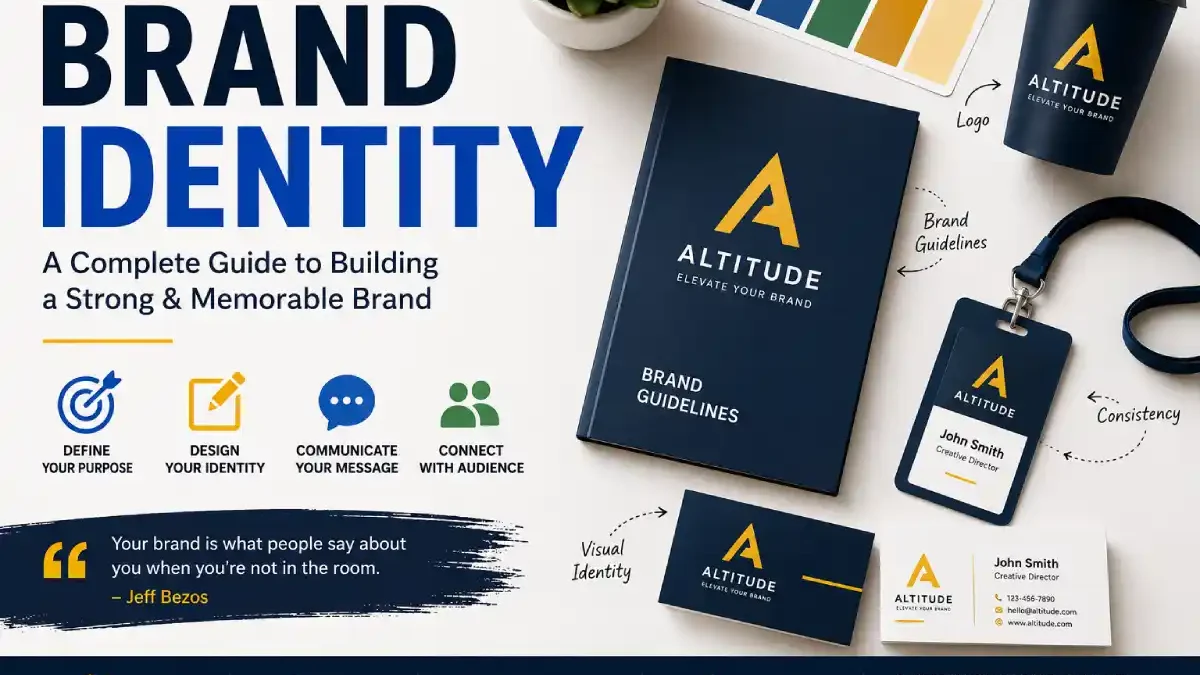

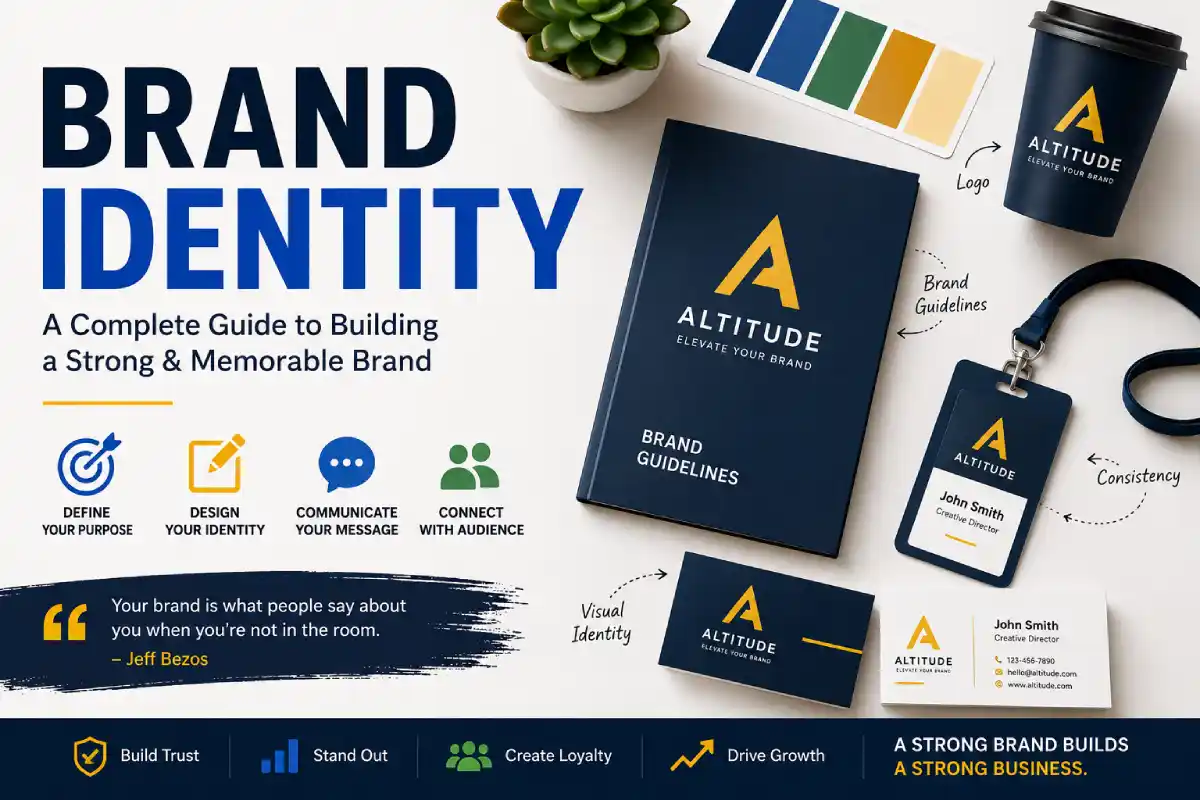


Brand individuality are those pictorial aspects, content, messages and experiences that define how people identify and relate with the enterprise. These rudiments mouth symbols, colours, typography and even an accepted tenor of voice, all aimed at structure a consistent link with customs.
Table of Contents
This Article Is Part of the Marketing Resource Hub
Explore more guides, tutorials, strategies, and marketing resources inside our
Marketing Resource Hub .
Introduction
Brand identity can establish exactly what it is that clients want to connect with, just in addition to exactly why to bear them in mind. This means that businesses really aren’t just aggressive on the product stage or expense stage, nevertheless on the viewpoint degree as well as knowledge that you provide consumers, and also rely upon. Lots of people tend to think of what is actually branding an organisation as just having an identity but complete brand identity can encompass anything to an extremely broader stage.
Branding is a mixture of the visual elements in addition to the tone of interaction along with the expectations for the individual, together with the actual belief that a customer gets relating to a business or business in.
If you want to increase your brands on the internet exposure, develop a new organisation, retool an existing organisation, or just want to gain that much needed competitive edge; knowing brand name identity can really work and help out.
What Is Brand Identity?
The definition of brand identity is what a company presents in visual and emotional form to the audience. According to the American Marketing Association (AMA), a brand represents more than a name or logo—it includes the perceptions, experiences, and associations people develop with a business over time.
It answers questions like:
- What does the business look like?
- How does it communicate?
- What values does it represent?
- How should customers feel when interacting with it?
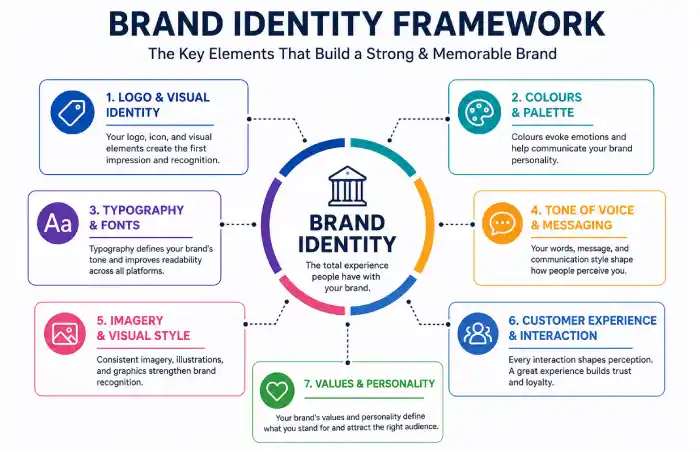
A complete identity usually includes:
| Element | Purpose |
| Logo | Creates visual recognition |
| Colour palette | Builds emotional association |
| Typography | Defines visual personality |
| Brand voice | Controls communication style |
| Imagery style | Creates consistency |
| Values | Defines company beliefs |
| Customer experience | Shapes perception |
Why Brand Identity Matters for Businesses
You could have the best product in the world. If no one recognizes it. Or it doesn’t ‘t gets the trust of people. Then it would be a very challenging task to get it sold.
A clear identity helps businesses:
Build Recognition
Consistent colours, designs, and messaging make a company easier to remember.
Example:
A customer may recognise a brand from:
- Packaging style
- Website design
- Social media posts
- Advertising visuals
before even reading the company name.
Create Customer Trust
We generally feel comfortable buying from companies we see as professional without a high degree of trust.
A complete identity shows:
- Reliability
- Attention to detail
- Clear positioning
Stand Apart from Competitors
Many businesses sell similar products. Identity helps answer:
“Why should customers choose this brand instead?”
For example:
Two coffee shops may sell similar drinks, but one may position itself as:
- Premium and modern
- Community-focused
- Sustainable and ethical
The identity supports that difference.
Key Components of Brand Identity
1. Brand Vision and Purpose
Before scheming visuals, businesses essential clarity around their determination.
A brand foundation includes:
- Mission
- Values
- Audience
- Market position
Example:
A fitness brand may focus on:
“Helping beginners build healthy habits through simple training.”
That message influences the entire identity.
2. Logo Design
A logo is an significant recognition component, but it is only one part of imprinting.
A good logo should be:
- Simple
- Memorable
- Flexible
- Suitable across platforms
Common logo types:
| Type | Example Usage |
| Wordmark | Company name-based logos |
| Symbol | Icon-based recognition |
| Combination mark | Symbol + text |
| Letter mark | Initial-based designs |
3. Brand Colours
Colours influence how clienteles perceive a business.
Common associations:
| Colour | Common Perception |
| Blue | Trust and reliability |
| Green | Nature and sustainability |
| Black | Luxury and sophistication |
| Red | Energy and excitement |
| Orange | Creativity and friendliness |
Colour choice must match the brand personality somewhat than follow tendencies only.
4. Typography and Visual Style
Fonts communicate personality.
For example:
- Modern fonts can feel innovative
- Traditional fonts can feel established
- Handwritten styles can feel personal
Businesses should maintain consistency across:
- Website
- Social media
- Presentations
- Marketing materials
5. Brand Voice and Messaging
A brand voice defines how a company communicates.
Examples:
Professional tone:
“Delivering reliable business solutions.”
Friendly tone:
“Helping small teams grow with simple tools.”
The right voice depends on the audience.
Brand Identity vs Brand Image vs Branding
These terms are often confused.
| Term | Meaning |
| Brand Identity | How a company presents itself |
| Brand Image | How customers perceive it |
| Branding | The process of creating and managing perception |
A company controls identity, but customer experience influences the final image.
Brand Identity Creation Workflow
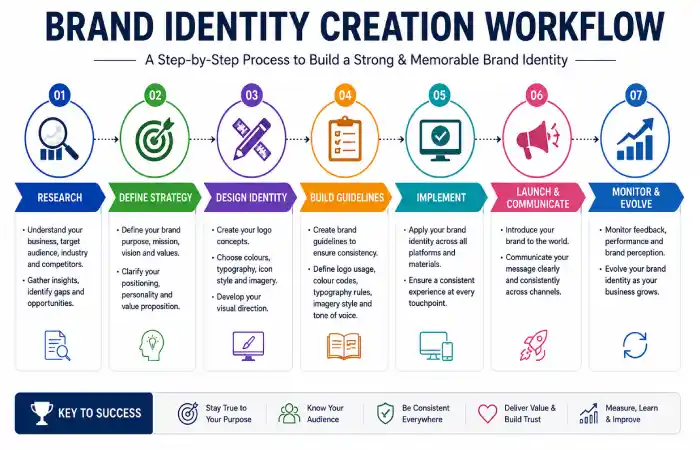
Building an identity usually follows a structured process.
Step 1: Research
Understand:
- Target audience
- Competitors
- Industry expectations
Research prevents creating a design that does not connect with customers.
Step 2: Define Brand Strategy
Create:
- Mission statement
- Values
- Personality
- Positioning
Example:
A sustainable clothing company may define itself around:
- Environmental responsibility
- Ethical production
- Minimal design
Step 3: Develop Visual Elements
Create:
- Logo
- Colours
- Fonts
- Design guidelines
Step 4: Build Brand Guidelines
A brand guideline document explains:
- Logo usage
- Colour codes
- Typography rules
- Image style
- Writing tone
This helps maintain consistency.
Step 5: Apply Across Platforms
A complete identity should appear consistently on:
- Website
- Social media
- Packaging
- Emails
- Advertisements
Brand Identity Elements Comparison
| Feature | Basic Identity | Strong Identity |
| Logo | Exists | Memorable and flexible |
| Colours | Random selection | Strategic palette |
| Messaging | Different styles | Consistent voice |
| Customer experience | Unplanned | Brand-focused |
| Guidelines | None | Clear system |
How Long Does It Take to Build Brand Identity?
The timeline depends on business size and complexity.
Typical expectations:
| Project Type | Estimated Time |
| Small business refresh | 2–6 weeks |
| New company identity | 1–3 months |
| Large organisation | Several months |
A faster process is possible, but rushed branding may create inconsistency later.
Common Brand Identity Mistakes
1. Focusing Only on Logo Design
A logo does not create the entire brand.
The customer experience matters equally.
2. Copying Competitors
Research competitors for understanding, not imitation.
A unique identity requires differentiation.
3. Changing Brand Style Too Often
Frequent changes can confuse customers.
Consistency builds recognition.
4. Ignoring Customer Feedback
A brand should evolve based on audience response.
Tools Used for Building Brand Identity
| Tool Category | Examples |
| Design | Canva, Adobe tools |
| Research | Survey platforms |
| Website | CMS platforms |
| Analytics | Website tracking tools |
| Collaboration | Design review platforms |
Brand Identity Expectations: What It Can and Cannot Do
A strong identity can:
✔ Improve recognition
✔ Create professional presentation
✔ Support customer trust
✔ Make marketing more consistent
However, it cannot:
✘ Replace product quality
✘ Guarantee immediate sales
✘ Fix poor customer experience
Brand identity works best when combined with good products, service, and communication.
Who Should Invest in Brand Identity?
Brand identity is useful for:
- Startups
- Small businesses
- Online stores
- Personal brands
- Established companies
- Organisations expanding into new markets
Brand Identity Examples by Business Type
Technology Company
Focus:
- Innovation
- Simplicity
- Reliability
Restaurant
Focus:
- Experience
- Atmosphere
- Food personality
Professional Service
Focus:
- Expertise
- Trust
- Authority
FAQ’s
What is brand identity?
Brand identity is the collection of design rudiments, messaging, and knowledges that signify how a company wants clienteles to recognise it.
Why is brand identity important?
Brand identity helps businesses generate recognition, interconnect values, & maintain consistency crossways customer connections.
How much does creating a brand identity cost?
Costs vary depending on whether businesses use freelancers, agencies, or internal teams. Simple projects may cost less, while complete identity systems require more research and design work.
Can a small business create a brand identity?
Yes. Small businesses can create effective identities by focusing on clear messaging, consistent visuals, and sympathetic their audience.
What makes a good brand identity?
A good brand individuality is clear, consistent, unforgettable, and aligned with client prospects.
Conclusion
Product identity goes beyond simply picking a name & colours. An identity acts as a holistic system that agrees businesses to clearly convey their brand persona, beliefs and purpose. A powerful brand individuality comes from the combination of research, a strong strategy, a good visual design, and a deep information of your customer base.
While brand identity does not assurance business success, a company that has a clear identity will be in a better position to productively device marking plans, earn the trust of their customers, and found themselves over time.
Businesses that produce well-researched, strategic peculiarities are most likely to build connections with their customers and prospects.