
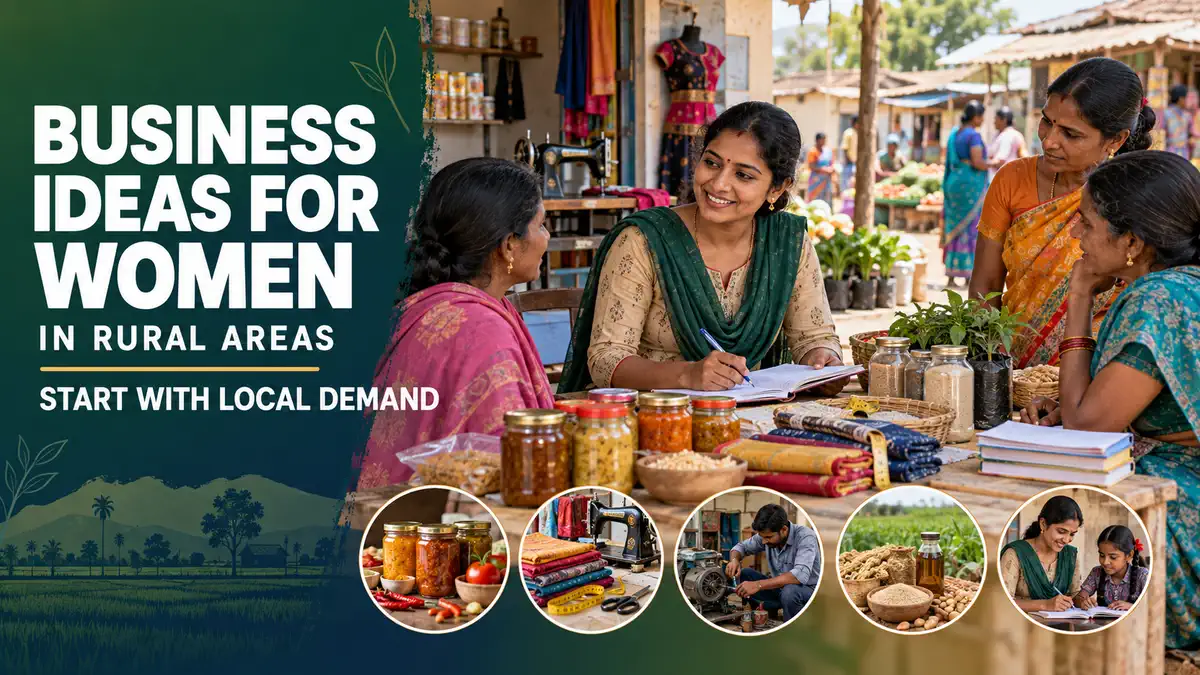



The strongest business ideas for women in rural areas solve a problem people already have. A tailoring service may save customers a journey to town; a local tutor may help children whose families cannot arrange regular travel. Before buying equipment, find out who would pay, how often they need the service and how you would deliver it.
A rural location can offer close customer relationships and access to local materials. It can also make transport, storage or reliable internet more difficult. Include both sides in your plan.
Table of Contents
Business Ideas for Women in Rural Areas Guide: Check Your Market
Talk to potential customers in your village and nearby communities. Find out where they purchase the product or service at present and what they pay for it and where it causes inconvenience. If you intend to market outside your area, find out how they will place their order, whether it will be packed and delivered.
Keep the first offer narrow. “School uniform alterations with a stated turnaround time” is easier to price and test than “all tailoring work”.
Best Business Ideas for Women in Rural Areas Compared
| Idea | Small first test | Main consideration |
| Tailoring and alterations | Accept a few common repair jobs | Equipment, fitting and turnaround time |
| Tutoring | Teach a small group in one subject | Preparation, suitable space and regular attendance |
| Seedlings or plant nursery | Grow a limited seasonal batch | Water, growing time and unsold plants |
| Food products | Take orders for one product | Shelf life, hygiene and applicable food requirements |
| Local digital assistance | Help customers with clearly defined online tasks | Reliable internet, privacy and avoiding work beyond your expertise |
The most popular idea is one you can handle on a regular basis, to customers you can identify. Seasonal orders are also acceptable: school uniforms, seedlings, festival stock…some sell a lot at certain times of the year but less at others.
Business Ideas for Women in Rural Areas for Beginners: A Four-Step Test
- Choose one offer and customer group. Identify the people most likely to need it.
- Estimate the full cost. Include materials, electricity, travel, packaging and your working hours.
- Take a small number of paid orders. Agree on the price and delivery date beforehand.
- Review the result. Record profit after direct costs, time spent and whether customers would order again.
For example, a tailor might take five alteration orders before purchasing another machine. If travel to collect garments takes longer than the repairs, she could set collection days or a minimum order value.
Business Ideas for Women in Rural Areas Examples
A woman with teaching experience could start an after-school maths group for one age range. She would need to check demand, set a manageable class size and track preparation time.
Someone with access to suitable space might test vegetable seedlings with a small batch timed to local planting needs. This carries the risk of unsold plants, so advance enquiries are useful but should not be treated as guaranteed orders.
A food business could begin with a limited pre-order menu. Before selling, check requirements through the Food Safety and Standards Authority of India. The rules that apply depend on the activity.
Business Ideas for Women in Rural Areas Cost and Expectations
Startup cost depends on what you already own. A tutoring service may need materials and a suitable teaching space. A nursery may need containers, growing inputs and water. Physical products may also need transport to buyers.
A common mistake is pricing materials but overlooking travel. If delivering one small order takes a long round trip, combine deliveries, agree on collection or include the cost in the price. Keep a reserve for spoilage, repairs or customers who change their minds.
Growth may be gradual. Repeat purchases and reliable delivery are better early signs than a large number of casual enquiries.
Business Ideas for Women in Rural Areas Tips
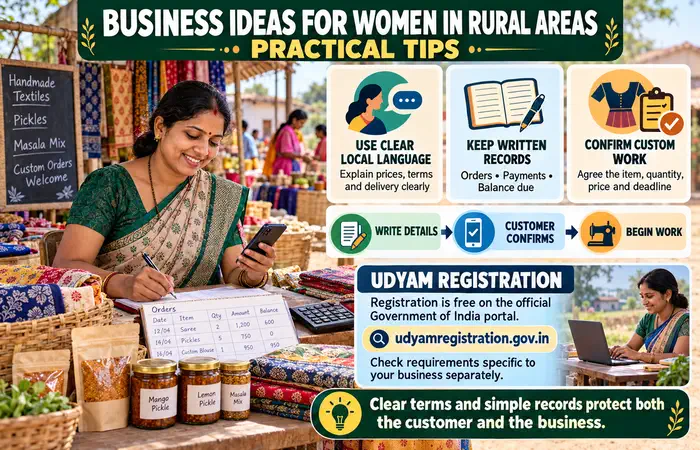
Use local language where it helps customers understand prices and terms. Keep a written record of orders and payments. Confirm what is included before beginning work, particularly for custom products.
If you consider MSME registration, use the Government of India’s official Udyam portal, which states that registration through it is free. Check separately for requirements specific to your business.
FAQs
Which business ideas for women in rural areas need little equipment?
Tutoring or a service based on skills and equipment you already have may be easier to test with limited purchases.
Should I sell only within my village?
Start where you can serve customers reliably. Expand to nearby areas when transport costs and demand make sense.
Can I rely on seasonal sales?
Seasonal products can help, but plan for quieter months and avoid buying more stock than you can reasonably sell.
Conclusion
Business ideas for women in rural areas work best when they fit local demand and practical delivery conditions. Test a focused offer, count travel and working time in the price, and expand after paid orders show that the model works.