




Digital PR for SEO can help a business earn media attention and authoritative mentions without purchasing links. It is most effective when the campaign contains a real story: original evidence, a useful expert opinion or a timely response to an issue audiences already care about.
Coverage is never guaranteed. Even a strong campaign may produce brand mentions without clickable links, while a smaller specialist publication may send more qualified visitors than a national outlet.
Table of Contents
What Is Digital PR for SEO?
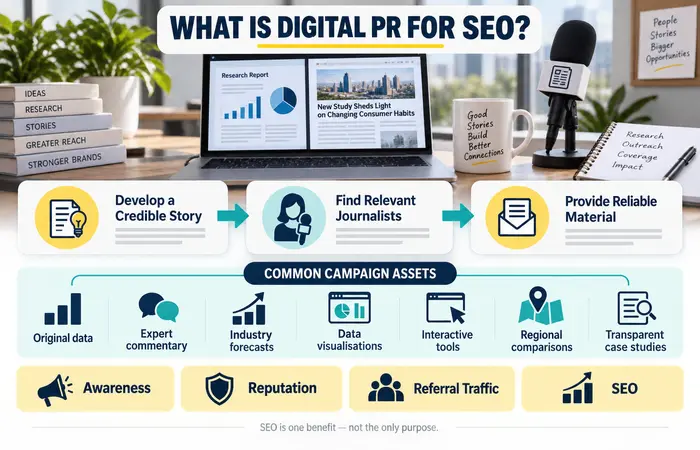
Digital PR applies journalistic thinking to online brand communications. It normally involves developing a story, identifying suitable journalists or publishers and providing reliable material they can use.
Common campaign assets include:
- Original surveys or proprietary data
- Expert commentary
- Industry forecasts
- Data visualisations
- Interactive tools
- Regional comparisons
- Transparent case studies
SEO is one possible benefit, but the campaign should also be useful for awareness, reputation and referral traffic.
Digital PR for SEO Guide: Campaign Types
| Campaign type | Resource requirement | Best use |
| Data-led research | High | Producing original news |
| Expert commentary | Low–medium | Responding to current developments |
| Newsjacking | Medium and time-sensitive | Joining an existing news cycle |
| Interactive asset | High | Explaining complex information |
| Case study | Medium | Demonstrating real outcomes |
| Community initiative | Varies | Building regional relevance |
The best digital PR for SEO aligns business expertise with a question journalists and readers genuinely want answered.
From Idea to Measurement
- Define the audience and objective. Separate brand-awareness, referral and link goals.
- Review the news landscape. Find unanswered questions, seasonal patterns and weak evidence.
- Validate the concept. Ask whether the claim is new, credible and relevant.
- Create the asset. Document sources, methodology and limitations.
- Build a focused media list. Match each story angle to the journalist’s coverage.
- Pitch clearly. Lead with the finding, not a long company introduction.
- Support publication. Provide quotes, charts, methodology and rapid responses.
- Measure the full result. Record coverage, links, mentions, referral traffic and enquiries.
Digital PR for SEO for Beginners
A beginner does not need a nationwide survey. An Indian recruitment consultancy could analyse anonymised job data from its own platform, provided privacy is protected and the sample is explained. A retailer could compare seasonal demand across regions using verified internal data.
Start with one defensible insight and a small list of closely matched publications. Avoid sending an identical pitch to hundreds of journalists.
Digital PR for SEO Cost
| Cost area | What it may include |
| Research | Survey responses, datasets and analysis |
| Creative production | Writing, design, charts or interactive development |
| Outreach | Media research, pitching and follow-up |
| Expert review | Legal, technical or subject-matter checks |
| Monitoring | Coverage and link-tracking tools |
A small expert-comment campaign may mainly require staff time. Data-rich campaigns can cost considerably more. No responsible agency can guarantee a specific number of editorial links because publishers control what they cover and whether they link.
Digital PR for SEO Examples
A fintech business could publish anonymised data showing how payment preferences vary between Indian cities. A cybersecurity company might provide evidence-based commentary following a newly disclosed vulnerability. A sustainable-packaging company could release a transparent waste-reduction case study.
Strong campaigns explain sample sizes, dates, methodology and limitations. Unsupported superlatives and manufactured survey claims can harm trust.
Performance Expectations
Digital PR may produce:
- Linked media coverage
- Unlinked brand mentions
- Referral visits
- Branded searches
- Journalist relationships
- Sales conversations
- Reusable content assets
Not every result will appear immediately in organic rankings. Google uses numerous systems and signals, so a single media link should not be treated as a guaranteed ranking event.
Pros and Limitations
Advantages: editorially earned exposure, reusable evidence, referral potential and stronger expert positioning.
Limitations: uncertain coverage, data-production costs, short news windows and limited control over headlines, anchors or links.
Digital PR for SEO Tips
Develop a clear methodology, prepare regional angles, keep pitches short and make sources easy to inspect. Offer spokespeople with genuine expertise and correct factual errors promptly. Do not pay a journalist for undisclosed editorial coverage.
Frequently Asked Questions
Does digital PR for SEO always generate backlinks?
No. A publication may mention the organisation without linking, remove a link during editing or decide not to publish the story.
How long does a campaign take?
Reactive commentary may take hours, while research-led campaigns can require several weeks or months.
Is digital PR the same as link building?
They overlap, but digital PR has wider goals. It seeks meaningful public coverage, while link building may include other activities such as resource outreach.
Conclusion
Digital PR for SEO is most valuable when it produces truthful, useful and newsworthy information. Measure coverage and commercial outcomes broadly, maintain realistic expectations and regard editorial links as earned results rather than guaranteed inventory.