



As mentioned previously, just publishing consistently doesn’t mean growth either, teams must know which subjects draw in the correct visitors and keeping them engaged for enough time to encourage an enquiry or sale. Content marketing analytics packages bring together all this evidence, so marketers do not need to rely on ‘what they think’ anymore.
It depends on your channels, how much reporting you need, as well as budget and technological capabilities. A small, Indian business perhaps just need a basic reporting dashboard (while content companies may want things like SEO intelligence and attribution in the mix, possibly automated).
Table of Contents
What Are Content Marketing Analytics Tools?
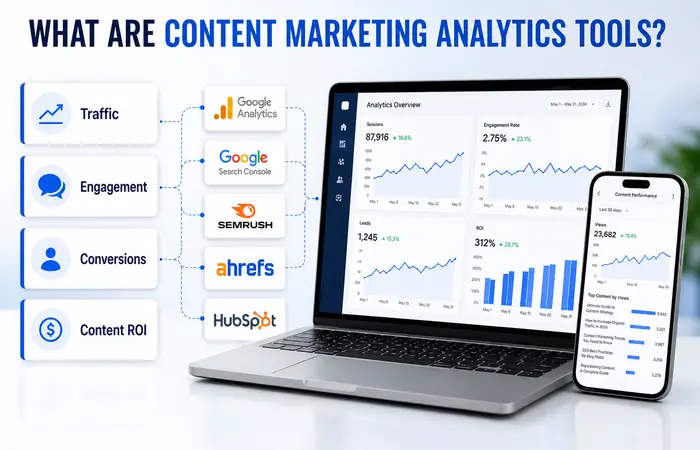
These tool types gather the analysis & understanding of how readers find, digest, interact with and engage with content. They can analyze such metrics as page views, search visibility, engagement actions, conversions, referral traffic, viewer retention and content monetization strategies.
Use them effectively by mapping them to clearly defined goals. You cannot evaluate a brand awareness article with the same conversion goals as a product comparison page, for example.
Best Content Performance Analytics Tools Compared
| Tool | Best suited to | Useful capabilities | Main limitation |
| Google Analytics 4 | Website and ecommerce measurement | Events, journeys, conversions and traffic acquisition | Setup and attribution can be complex |
| Google Search Console | Organic search performance | Queries, clicks, impressions and indexing reports | Does not measure complete on-site behaviour |
| Semrush | SEO-led content teams | Keyword tracking, competitor research and content auditing | Paid plans may be costly for small businesses |
| Ahrefs | Search visibility and backlinks | Content research, rankings and link analysis | Limited first-party conversion analysis |
| HubSpot | Lead-generation teams | CRM-connected reporting and campaign attribution | Advanced functions require higher-tier plans |
| Matomo | Privacy-conscious organisations | Web analytics, event tracking and data control | Self-hosting may need technical support |
| Looker Studio | Multi-source reporting | Custom dashboards and connector-based reporting | Data quality depends on connected sources |
Key Features to Look For
Useful content marketing measurement tools should provide more than total page views. Look for:
- Traffic-source and campaign measurement
- Search-query and keyword visibility
- Scroll, video or download engagement tracking
- Lead and ecommerce conversion reporting
- Content grouping by topic, format or funnel stage
- Custom dashboards and scheduled reports
- Integration with CRM, advertising and SEO platforms
- Appropriate privacy and access controls
India-based organisations should also consider consent management, data retention and whether the platform supports their existing advertising and sales systems.
Content Analytics Workflow: From Objective to Action
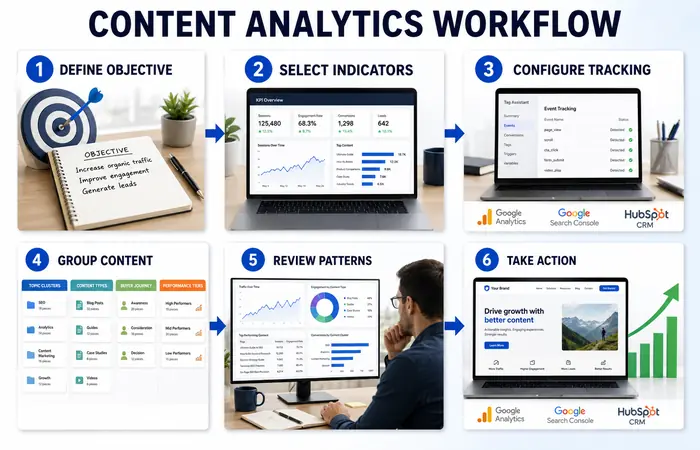
A practical measurement workflow can be kept relatively simple:
Define the objective:
Decide whether the content should build awareness, generate leads, support sales or retain customers.
Select relevant indicators:
Use impressions and reach for awareness, engagement for consideration, and qualified conversions for commercial content.
Configure tracking:
Set up events, conversion actions, campaign parameters and CRM fields.
Group related content:
Compare topic clusters or funnel stages instead of judging unrelated pages together.
Review patterns:
Examine performance across a meaningful period and account for seasonality.
Act:
Update strong pages, improve weak calls to action and retire content that is outdated or misleading.
Content Engagement Analytics Versus ROI Tracking
Engagement metrics indicate whether people are consuming or interacting with an asset. They include engaged sessions, scroll depth, video completion, downloads and repeat visits.
Content ROI tracking software goes further by connecting content with leads, sales or customer value. However, attribution is rarely perfect. A consumer may interact with a few articles, watch a video and convert on branded search later, which is why teams need to be looking at assisted conversions, and journeys.
Performance Expectations and Limitations
Analytics software cannot improve content automatically. It identifies patterns that marketers must interpret in context. A high-traffic article may generate few leads, while a low-volume comparison page may influence valuable purchases.
Reliable findings also take time. Smaller websites may need several weeks or months to collect enough data for sensible comparisons. Tracking restrictions, cookie consent, cross-device behaviour and offline sales can produce incomplete figures.
The key benefits are more confident decisions, prioritizing resources effectively, and improved reporting consistency. Challenges include the initial investment/effort needed to implement it, data scattered across different systems and the temptation to target metrics that are easy to report, but don’t necessarily reflect business value.
Who Should Use Content Marketing Reporting Tools?
These platforms are suitable for:
- Publishers monitoring topic and audience growth
- SMEs evaluating limited marketing budgets
- Ecommerce brands connecting guides with purchases
- B2B teams tracking content-assisted leads
- Agencies preparing reports across several clients
Smaller and very content limited websites might just about cope at first with Google Search Console and basic setup on some sort of analytics tools. In most cases buying an enterprise tool before defining goals and having metrics in place will result in an unnecessary expense and a lack of better decisions.
How to Choose the Right Tool
Start with the decisions the data must support. If the priority is organic visibility, combine search-performance and backlink dataTo use content effectively to generate leads, choose software which can attribute your content engagement back to the CRM record. Businesses that operate multi-channel may want to use an analytics dashboard that aggregates your analytics and sales reporting alongside your paid social media activity.
Check integration capabilities, number of users allowed history/data available to pull, export capabilities and training needed prior to buying. Try a trial if possible and test with a reporting workflow.
Frequently Asked Questions
Which content marketing analytics tools are best for small businesses?
Google Search Console and google analytics4 are good starting points and do not cost anything on software subscription. Looker Studio can then combine chosen metrics into a customized report.
What is the difference between content analytics and web analytics?
Web analytics measures total website activity. Content analytics clusters on how individual assets, formats and topics contribute to post, search visibility and business objectives.
Can content marketing ROI be measured accurately?
It can be estimated, but perfect attribution is uncommon. Using conversion tracking, CRM data and assisted-conversion analysis provide a more balanced view than relying on a single attribution model.
Conclusion
The highest performing content marketing analytics tools answer meaningful business questions while avoiding extra reporting busy work. Focus on the goals and trackable first-then stack on the platforms of SEO, attribution or dashboards as you mature in measurement. Not one tool is definitive, but marrying the metrics of engagement, search and conversion may help you to make more data-driven content choices.