




Content optimization for SEO is more than increasing a target keyword to an article. It includes creating a useful page that answers the explorer’s question, covers the subject obviously and helps search engines understand its purpose. When carried out correctly, optimization can improve importance, readability and organic visibility. However, it cannot assurance a particular ranking because competition, website authority, technical health and backlinks also affect results.
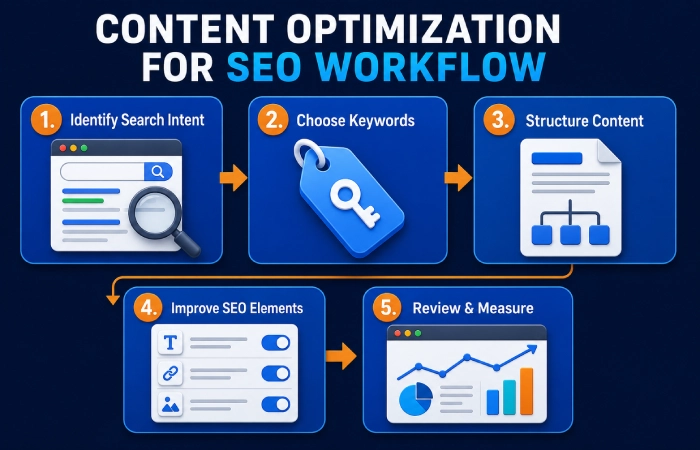
Table of Contents
What Is Content Optimization for SEO?
Content optimization is the process of evaluating and improving an existing or new page for users and search engines. It may include similar search intent, reforming headings, removing pointless information, increasing evidence, improving internal links and writing stronger metadata.
The priority should remain the reader. Google recommends producing original, reliable and people-first information instead of content created mainly to manipulate rankings. For further guidance, read Google Search Central’s official resource on creating helpful, reliable, people-first content.
Why Content Optimization Matters
A page may contain accurate information but still perform poorly if its purpose is unclear. Weak headings, a vague introduction, missing subtopics or poor internal linking can make the page difficult to understand.
Optimisation can help a page:
- Answer its main query more directly.
- Cover important supporting questions.
- Become easier to scan on mobile devices.
- Connect with related pages on the website.
- Earn more relevant impressions and clicks.
- Remain accurate as information changes.
These improvements are particularly useful for Indian businesses competing for informational and commercial searches in crowded sectors such as marketing, finance and technology.
Content Elements and Their SEO Roles
| Content element | Main purpose | Common limitation |
| Page title | Describes the page in search results | Clickbait can reduce trust |
| Introduction | Confirms intent and gives a direct answer | Long introductions delay the answer |
| H2 and H3 headings | Organise topics and supporting questions | Repetitive headings add little value |
| Internal links | Connect related resources | Irrelevant links distract readers |
| Images | Explain processes and improve engagement | Large files can slow the page |
| Meta description | Encourages relevant clicks | Google may display different text |
| FAQ section | Answers useful follow-up questions | Generic FAQs rarely add value |
A Practical Content Optimization Workflow
1. Identify the Search Intent
Review the query and determine what the user expects. For “content optimization for SEO”, the dominant intention is educational: the searcher wants a process, practical guidance and realistic outcomes.
2. Audit the Existing Page
Check whether the page has a clear title, direct introduction, logical headings, original examples, suitable internal links and a useful conclusion. Remove repeated paragraphs and unsupported claims.
3. Build Topical Coverage
Include strongly related theories such as on-page SEO, search intent, content quality, keyword importance, readability and content restores. Related terms should be included only when it supports the subject.
4. Improve On-Page Elements
Write a descriptive title, concise URL and natural meta description. Use the main keyword in prominent locations where it reads comfortably, but do not repeat it to reach an arbitrary density.
5. Add Links and Supporting Evidence
Link to relevant cluster articles and trustworthy external sources. Anchor text should explain what the linked page covers rather than relying on phrases such as “click here”.
6. Measure and Refine
Use Google Search Console to monitor impressions, clicks, average position and queries. Compare a significant period before and after the update while accountancy for seasonality and algorithm changes.
Using Secondary Keywords Without Weakening Relevance
Branding Terminology Explained as a Content Example
Suppose an article targets “brand identity and brand image difference”. Useful supporting terms might include brand image vs branding, brand perception vs identity and corporate image vs identity. These phrases belong together because they address closely related distinctions.
They should not, however, be added repeatedly to an unrelated SEO guide. This shows one key principle of optimization: it matters most what is semantically relevant, not stuffing in everything the tool spits out. Use the terms which can add value to the reader, not just as they popped up in the list of suggested terms.
What Content Optimization Can and Cannot Do
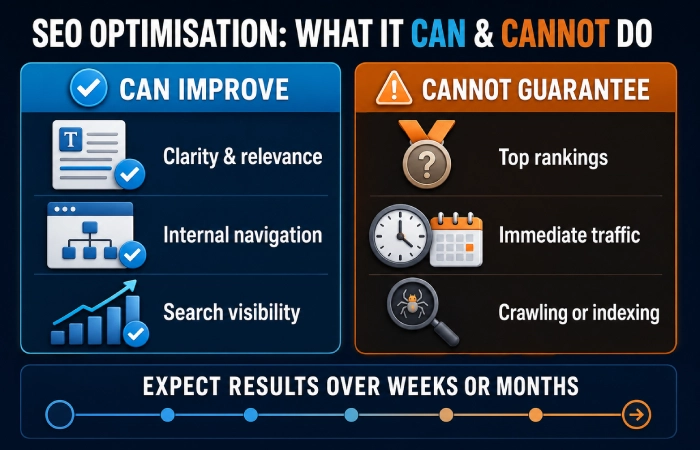
Content optimization not only aids the clarity and can enable a page to be listed in further searches, but it doesn’t necessarily work overnight; some of the benefits are reported in terms of hours, whereas other months – it makes sense to have the page checked around a couple of weeks after any optimizations.
Content optimization, unfortunately, cannot make up for indexing issues, slow mobile speed, a clumsy structure or any lack of authority. A technically accessible page with distinctive insights is more likely to benefit than a lightly rewritten article offering nothing new.
Advantages and Limitations
Advantages: Better readability dedicated topical importance, more useful internal links and improved position with search intent.
Limitations: No guaranteed rankings, conclusions can take time, and repeated optimization without new value may give small improvement.
Frequently Asked Questions
What is content optimization for SEO?
Content optimization for SEO means improving a webpage’s information, structure and on-page elements so it serves readers effectively and can be understood by search engines.
How frequently should content be updated?
Every six months, I’ll review all “major” content pages and update if any of the following occur: An information change in your product, service, or the space/industry that warrants the updates; You see a shift in searcher behavior/intent in search-related metrics, the text you see on page SERP results; Performance data tells you a page is not hitting its goals.
Is keyword density still important?
There is no universal ideal percentage. Natural coverage, search intent and completeness are more useful than repeating an exact phrase.
Can an optimised article rank without backlinks?
It is possible for lower-competition queries, particularly when the website has topical authority. Competitive searches may still require strong internal authority, references and relevant backlinks.
Conclusion
Here’s How to Write Effective SEO content Optimize Your content in 4 simple stages to discover, trust and authority. Determine the reader and give them a correct, clear answer to their query. Improve structure if poor, validate claims with evidence, selectively include your related terms and monitor performance. This process is all about creating a page users need and thus gets found.