

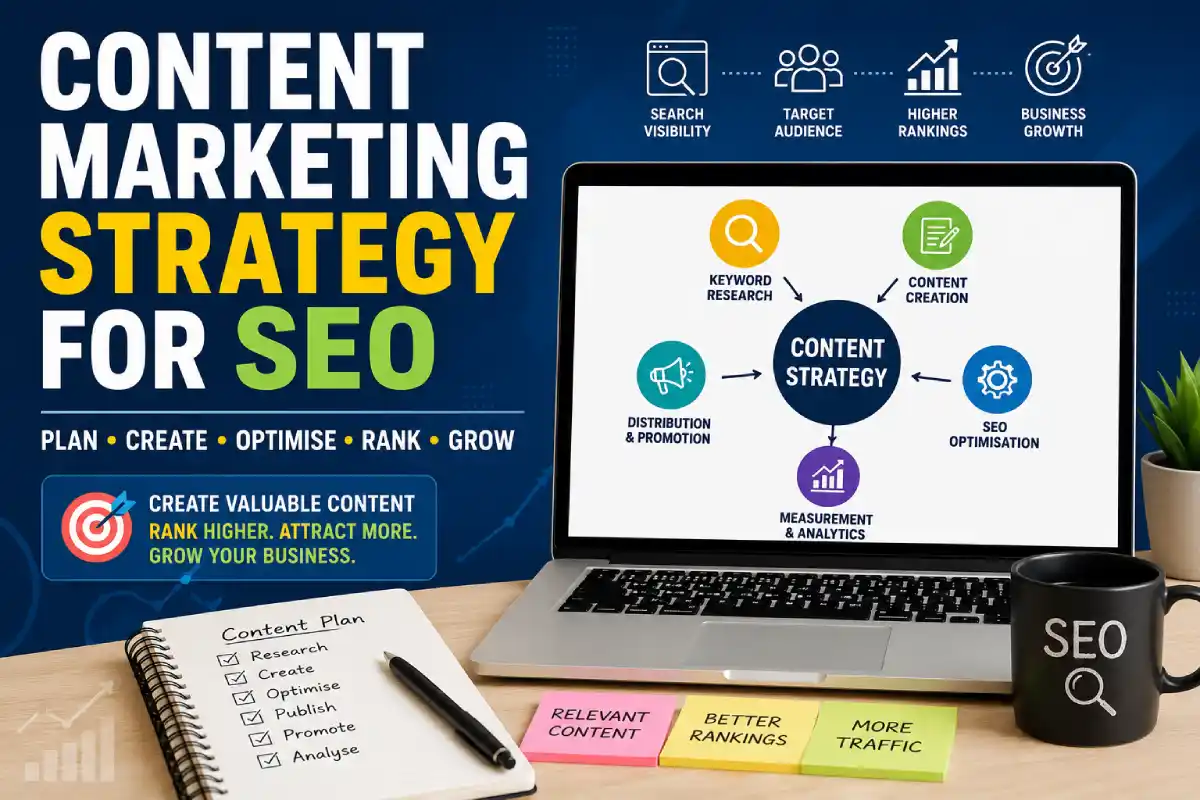


Content marketing strategy for SEO comprises a set of processes and procedures used to produce, optimise and then distribute a meaningful, appealing content across the internet to gain search traffic. It can be a mix between research on keywords or board audience, content creation and optimise for search engines, or may not.
Table of Contents
Introduction
How is Content Marketing for SEO successful? You successfully execute a plan that results in creating content which people find engaging, satiate intent, and thus help in creating consistent long-term organic ranking. What is more important? Just not more content creation but a direction to align the content creation process with your business goals.
Within every other search engine, there is a significant emphasis on useful, trustworthy and experience-oriented content. This is where keywords are no longer enough, but the usefulness, extent of topic coverage, technical optimisation and problem-solving nature of content becomes more important.
Whether you operate a blog, E-commerce site, service or business website – having a plan in place will help you improve your rankings, bring in targeted visitors, and grow in a healthy manner.
Definition: What Is a Content Marketing Strategy for SEO?
A content marketing strategy for SEO is a structured plan that explains:
- What content to create
- Which keywords to target
- Who the content is written for
- How content will be optimised
- How performance will be measured
The goal is to create content that satisfies both:
- Search engine requirements
- Human user expectations
A complete strategy includes:
| Component | Purpose |
| Keyword research | Find relevant search opportunities |
| Content planning | Organise topics and publishing schedule |
| SEO optimisation | Improve search visibility |
| Internal linking | Connect related pages |
| Content updates | Maintain accuracy |
| Analytics tracking | Measure results |
Why Contented Marketing & SEO Effort Composed
SEO helps persons discover your website, whereas contented gives them a cause to stay.
Without content:
- There are fewer ranking opportunities
- Users have fewer answers
- Search engines have less context
Without SEO:
- Good content may not reach the right audience
Composed, they create a system where valued content attracts carbon-based companies.
Importance of a Content Marketing Strategy for SEO
Modern search behaviour has changed.
Users now expect:
- Detailed answers
- Reliable information
- Fast-loading pages
- Clear explanations
- Real examples
Businesses that publish helpful content consistently can build authority within their topic area.
However, expectations should remain realistic.
Content marketing does not usually create instant results. SEO growth often requires:
| Stage | Typical Focus |
| First months | Research and content foundation |
| 3–6 months | Ranking improvements and traffic growth |
| 6–12 months | Stronger authority and visibility |
Results depend on rivalry, website quality, content depth, & constancy.
Content Marketing Strategy Work flow
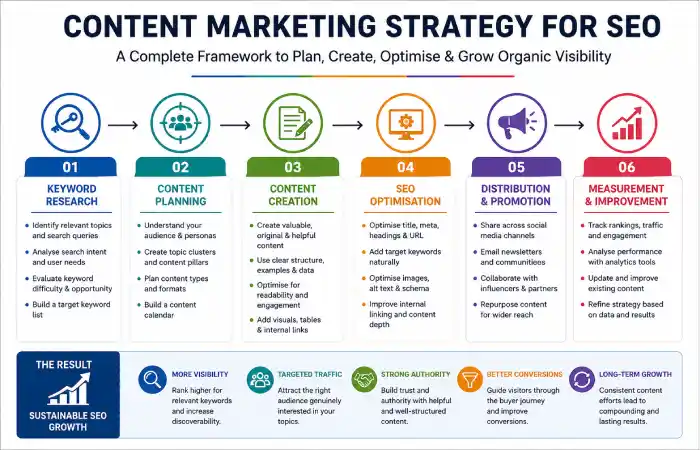
A successful SEO content procedure usually follows these steps.
Step 1: Understand Your Audience
Before creating content, identify:
- Who your customers are
- What questions they ask
- What problems they need solved
- What information influences decisions
Example:
A digital marketing website audience may search:
- SEO tips
- Content planning methods
- Marketing tools
- Ranking strategies
Step 2: Perform Keyword Research
Keyword research helps recognize topics people are penetrating for.
Important keyword types:
| Keyword Type | Example |
| Informational | What is SEO content |
| Commercial | Best SEO tools |
| Transactional | Buy SEO service |
| Navigational | Brand name searches |
A strong strategy balances different keyword types.
Step 3: Create Topic Clusters
Instead of writing unrelated articles, organise content around main topics.
Example:
Main Topic:
Content Marketing Strategy
Supporting Topics:
- SEO content writing guide
- Keyword research guide
- Content calendar template
- On-page SEO checklist
- Internal linking strategy
This helps search engines understand topical relevance.
Step 4: Create High-Quality Content
Good SEO content should:
- Answer the search query clearly
- Provide useful examples
- Include structured headings
- Be easy to read
- Offer original insights
A helpful article usually includes:
- Introduction
- Clear explanations
- Examples
- Tables
- FAQs
- Practical steps
On-Page SEO Optimisation Checklist
After writing content, optimise important elements.
| SEO Element | Best Practice |
| Title tag | Include target keyword naturally |
| URL | Keep short and descriptive |
| Headings | Use logical structure |
| Images | Add descriptive ALT text |
| Internal links | Connect related content |
| Meta description | Explain page value |
Content Types That Support SEO
Different formats serve different goals.
Blog Articles
Best for:
- Educational topics
- Long-tail keywords
- Building authority
Guides
Best for:
- Comprehensive searches
- Evergreen traffic
Case Studies
Best for:
- Trust building
- Demonstrating experience
FAQs
Best for:
- Answering specific queries
Content Marketing Tools Comparison
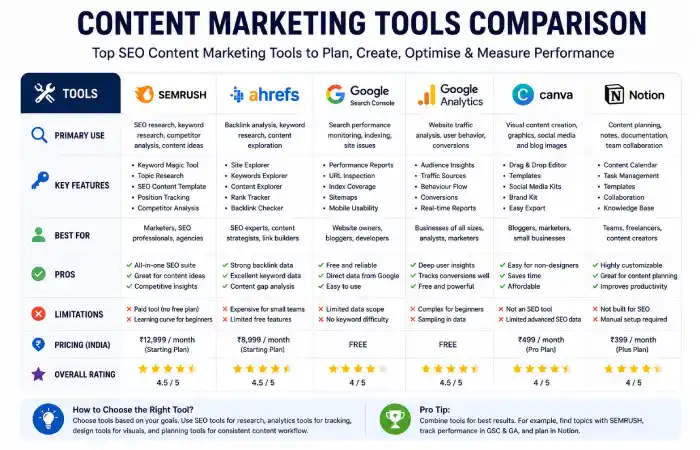
| Tool | Main Use | Suitable For |
| Google Search Console | Performance tracking | All websites |
| Google Analytics | Visitor analysis | Businesses |
| Semrush | SEO research | Advanced users |
| Ahrefs | Backlink analysis | SEO professionals |
| Canva | Content visuals | Beginners |
Content Optimisation vs Traditional Blogging
| Traditional Blogging | SEO Content Strategy |
| Writes frequently | Writes with purpose |
| Focuses on publishing | Focuses on user needs |
| Limited keyword planning | Research-driven topics |
| Few updates | Regular optimisation |
How to Measure SEO Content Performance
Important metrics include:
Organic Traffic
Shows how many visitors arrive from search engines.
Keyword Rankings
Shows search visibility improvement.
Engagement
Includes:
- Time on page
- Scroll depth
- Pages visited
Conversions
Measures whether content supports business goals.
Common Content Marketing Mistakes
Publishing Without Research
Creating content without understanding search demand often leads to low visibility.
Keyword Stuffing
Using keywords unnaturally can reduce readability.
Good SEO focuses on meaning, not repetition.
Ignoring Content Updates
Information becomes outdated.
Regular reviews improve accuracy.
Writing Only for Search Engines
Content should always prioritise people first.
Content Marketing Strategy Expectations
A realistic SEO content strategy should focus on long-term improvement.
It can help:
✔ Increase organic visibility
✔ Build website authority
✔ Educate customers
✔ Support conversions
But it may not:
✘ Guarantee first-page rankings immediately
✘ Replace a poor website experience
✘ Work without consistency
Who Should Use an SEO Content Strategy?
This approach is useful for:
- Bloggers
- Small businesses
- SaaS companies
- Ecommerce websites
- Service providers
- Marketing teams
Example Content Marketing Plan
Monthly plan example:
| Week | Activity |
| Week 1 | Keyword research |
| Week 2 | Create long-form article |
| Week 3 | Optimise and publish |
| Week 4 | Update, promote, analyse |
FAQ’s
What is a content marketing strategy for SEO?
A content marketing strategy for SEO is a planned method of creating and optimising content to improve search visibility and attract relevant website visitors.
How long does SEO content take to rank?
Ranking time depends on competition, website authority, content quality, and optimisation. Many websites need several months before seeing meaningful improvements.
How often should businesses publish SEO content?
There is no universal rule. Consistent, high-quality publishing is generally more effective than publishing large amounts of low-quality content.
Is content marketing still important for SEO?
It really does. Good, well laid out content still counts towards what comes up organically.
What makes SEO content successful?
Killer content should balance a good understanding of search intent with useful information, technical optimisation, and user-friendliness.
Conclusion
A well-optimized content marketing plan is your vehicle that moves from a random to a controlled approach to grow your online business. A better knowledge of your audience, keyword research skills, creation of valuable resources and measurement of outcomes, will enhance your website authority and ranking. With SEO content, patience is a necessity. This isn’t only a chase for high rank but a means to provide value for search engine users and meet your business goals.